
Physics @ Ahmedabad University
Many major technological advancements have their roots in Physics, as exemplified by the design of semiconductor chips to the World Wide Web's creation at CERN.
Physics elucidates the fundamental principles governing the universe's building blocks, from the scientific principles behind the behaviour of spacetime (such as special and general relativity) to matter at very short distances (e.g., quantum mechanics, particle, nuclear, and atomic physics), and the behaviour of extensive collections of matter (e.g., statistical mechanics, condensed matter physics, and plasma physics).
A deep understanding of Physics opens a vast array of scientific and technological avenues, including Biophysics, Astrophysics, Atmospheric Physics, and Engineering Physics. It empowers us to comprehend the inner workings of the sophisticated devices that shape our lives, from X-ray and MRI machines to cell phones, quantum computers, and satellites.
With Physics, you can discover the universe's secrets and forge pathways in research, technology, and innovation, translating to shaping the future.
Academics
Programmes
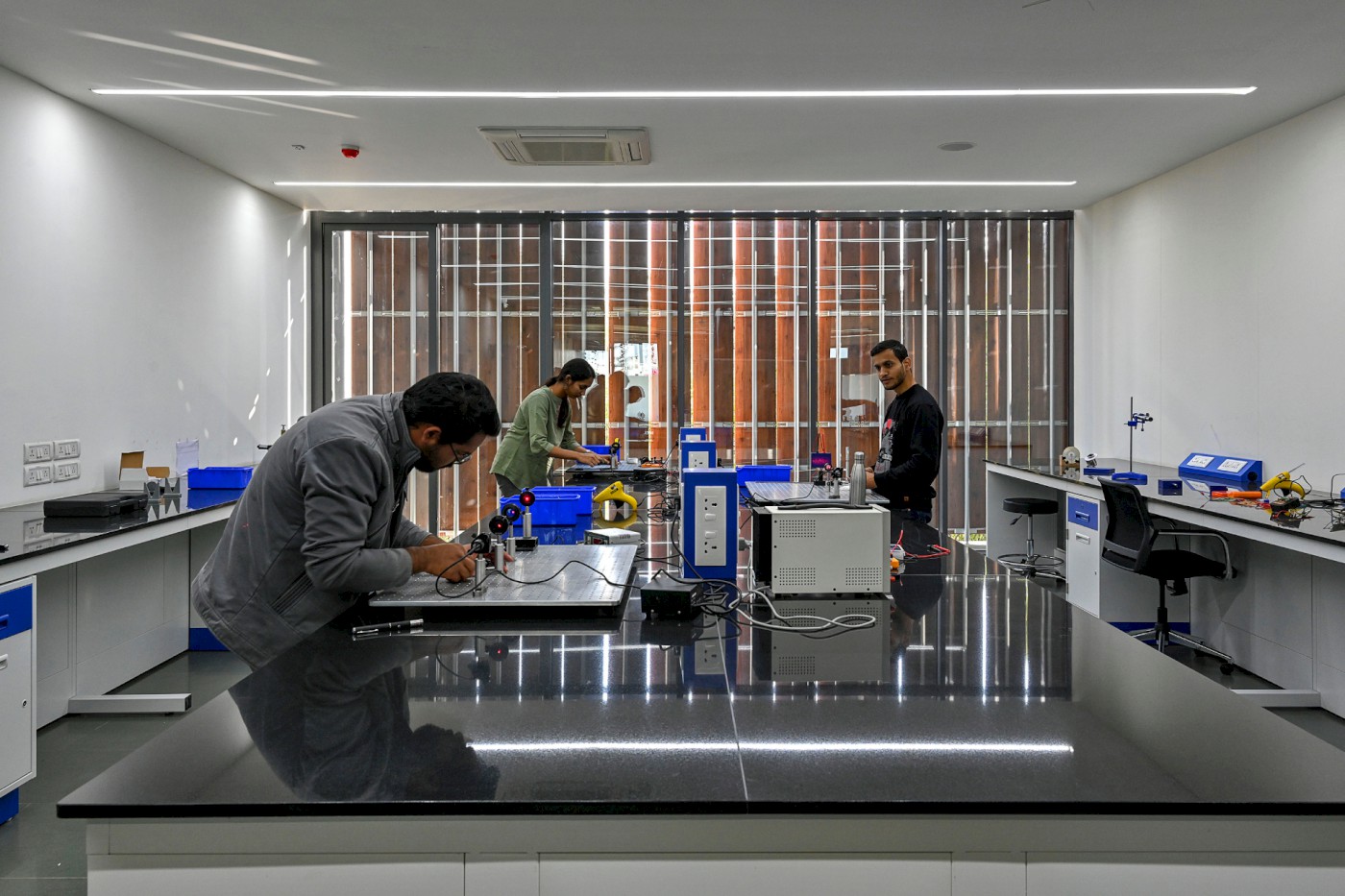
Physics offers a path to understanding the universe, revealing the fundamental principles governing everything from elementary particles and atoms to engineered systems, biological organisms, stars, and the cosmos. This breadth of application makes Physics a versatile and potent field of study.
A Physics education opens doors to many scientific explorations. For example, the Government of India has launched the National Quantum Mission to revolutionise communication, while astrophysical missions like AstroSat and Aditya-L1 are expanding our understanding of the universe. Furthermore, advancements in Machine Learning and Neural Networks are deeply rooted in Physics, a connection captured by the Nobel Prize in Physics 2024.
These examples offer a window to the exciting possibilities that await within the world of Physics. To capture this dynamism and potential, Ahmedabad University, with its renowned faculty and experts, has curated a range of Physics-focused programmes of varying degrees across levels of education. Explore the opportunities below.
Bachelor of Science (Honours) in Physics
Bachelor of Science (Honours) in Engineering Physics
Minor in Physics
BS in Physics + MS in Quantitative Finance
PhD in Physics
Admissions
Ahmedabad University employs a contextual and holistic approach to undergraduate admissions, ensuring a comprehensive evaluation of each applicant. You can find detailed information about the admissions process here.
The University believes in creating an inclusive learning environment and equal access to education for all. We have a range of need-based and merit-based scholarships to support our students. Please find the details here.
Admission to our PhD programme is determined through an entrance test followed by an interview. Please find detailed information about the process here.
Research
Research Clusters
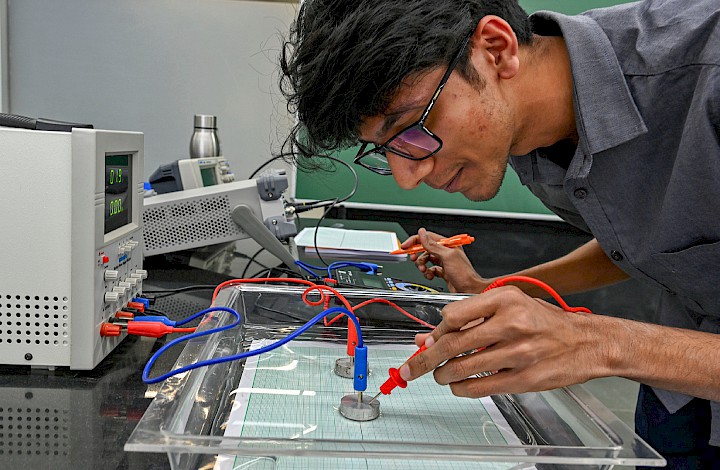
Complex research challenges are best addressed through interdisciplinary collaboration, which provides multiple perspectives, a thorough understanding, and holistic solutions. Ahmedabad University cultivates a cross-disciplinary environment, empowering young researchers to collaborate with experts from diverse backgrounds, enriching their knowledge, and developing solutions with broad societal impact.
List of Research Clusters

Faculty Publications
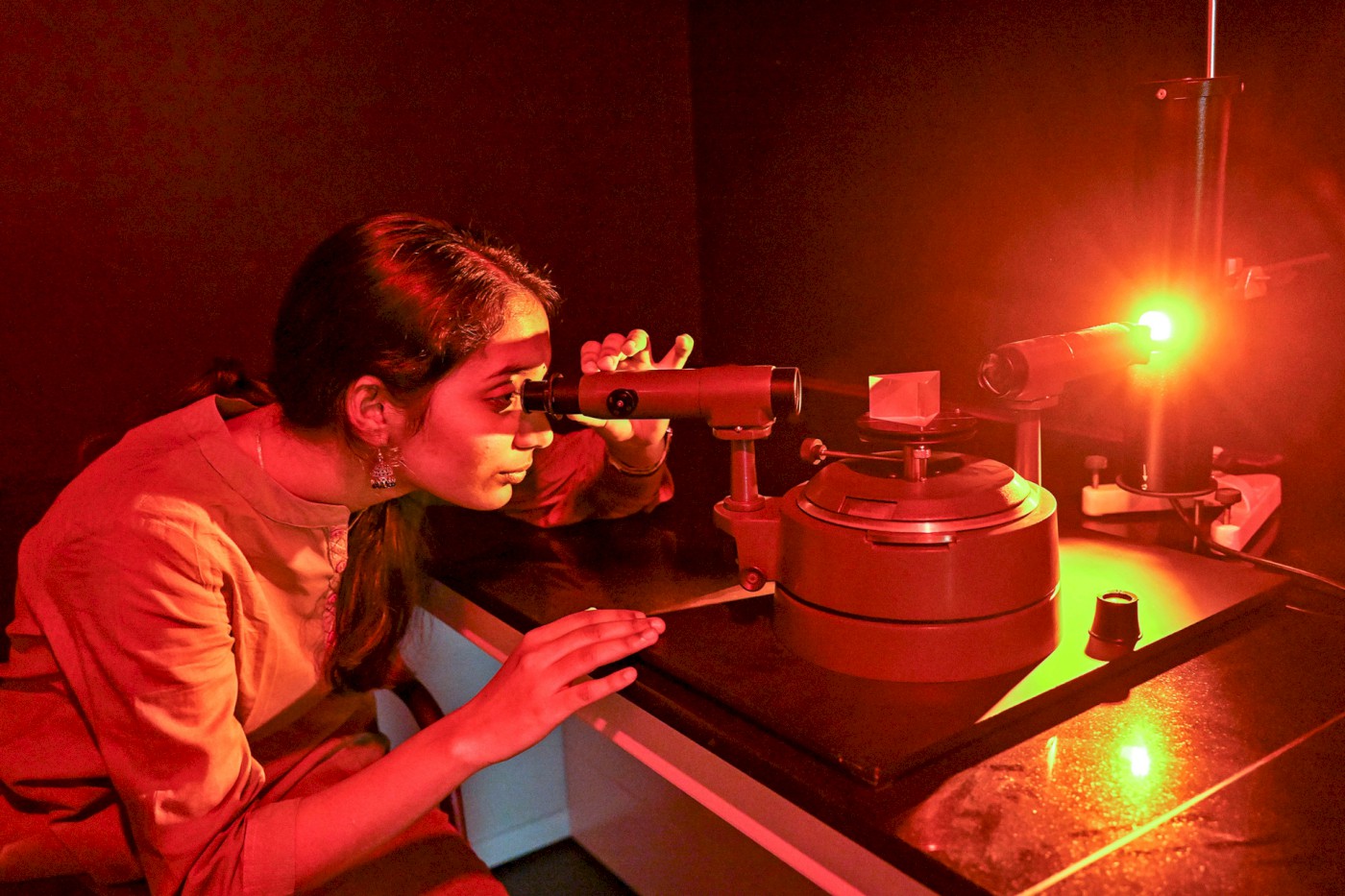
Ahmedabad University's Physics faculty are widely published authors, contributing significantly to the scientific community. Their research is regularly featured in leading journals, establishing their expertise and commitment to advancing the field.
UG Thesis
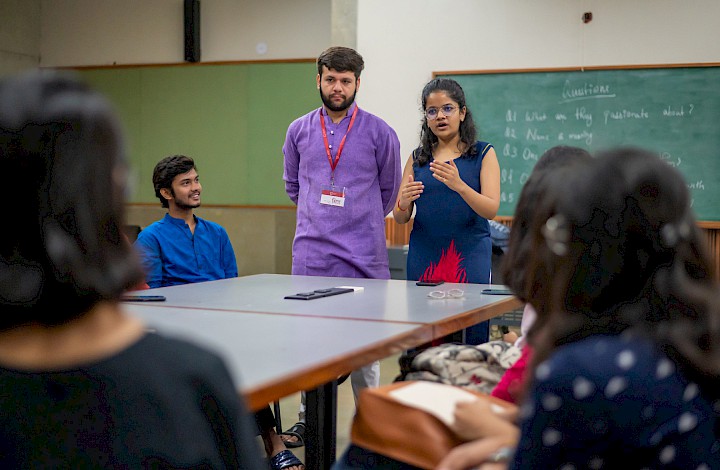
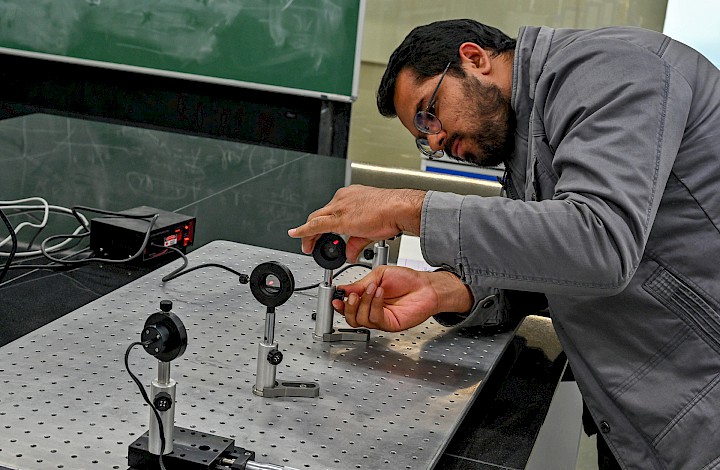
An Undergraduate Thesis is a scholarly document that examines a focused or a narrow issue or a problem and evaluates, analytically and critically, the issue or problem at hand in depth and often suggests a suitable direction for a solution. An Undergraduate Thesis should be done individually under the supervision of a faculty member and it prepares the student to undertake independent research and teaches them about methods of enquiry. It helps build deep knowledge in one narrow domain. An Undergraduate Thesis is suitable for a student who wishes to pursue graduate studies leading to doctoral education and perhaps build a research-oriented career.
UGRP
Aiming to prepare students for graduate school and research-driven careers, the University's Undergraduate Research Programme allows students to explore topics in depth. Participants can conduct independent research under faculty supervision or contribute to faculty-led projects, fostering a close working relationship with professors.
Grants & Funding
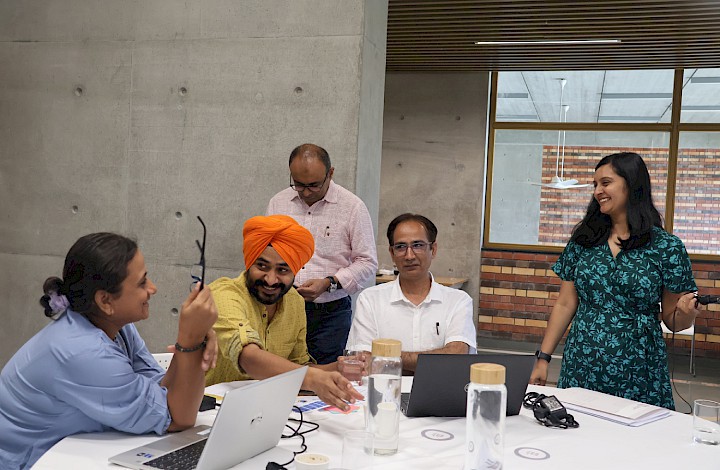
Ahmedabad University's robust research ecosystem empowers Physics faculty and students to regularly pursue their scholarly interests. This is facilitated by internal funding opportunities, including seed, start-up, and University challenge grants, alongside support from sponsoring agencies. Their commitment to research extends to enhancing pedagogy by disseminating their findings at national and international conferences.
Interdisciplinary Teaching and Research
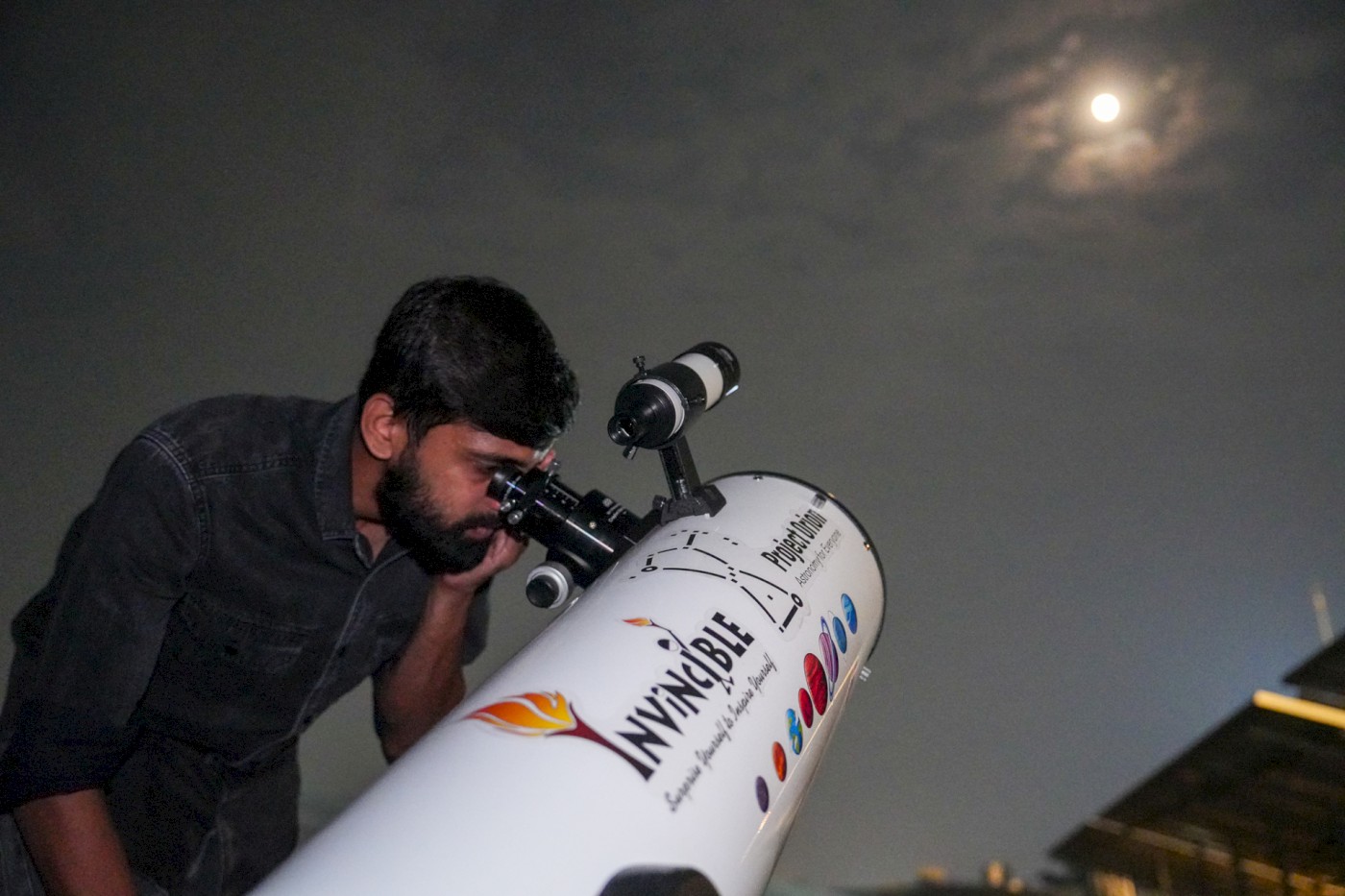
Ahmedabad University promotes interdisciplinary thinking in its teaching and research. While all undergraduate students participate in the interdisciplinary Foundation Programme in their first year there are other opportunities to engage with faculty in courses and projects that straddle multiple disciplines including physics. Faculty of the University are involved in studying problems in interdisciplinary areas such as air pollution and climate change, quantum computing, complex systems and biophysics, neuroscience and sensory signal processing, and mathematical biology and offer courses and projects on the same that students of physics can engage with.
Capstone Projects
A Capstone Project enables students to apply their learnings to a practical situation or integrate real-world experiences and draw inferences, build a product or service, address community issues or historical problems based on data, evidence, and more. It requires students to structure an unstructured problem, research, collect data, develop options and their critical analysis, offer recommendations and insights, and prepare a convincing presentation (written, oral, and/or multimedia). The Capstone Project trains a student for professional life. These are typically sponsored by an organisation (governmental/non-governmental or non-profit/for-profit) or, in rare cases, motivated by a real problem or issue. It is a group project, preferably an interdisciplinary group across Majors, Programmes, and Schools, which equips students to become young leaders in problem-solving and to work in teams.
Teaching Innovation
Faculty administering the physics programme at Ahmedabad University employ diverse hands-on activities and engage students with real-world complex problems, reflecting University's emphasis on active and experiential learning and nurturing problem-solving approach.
Events
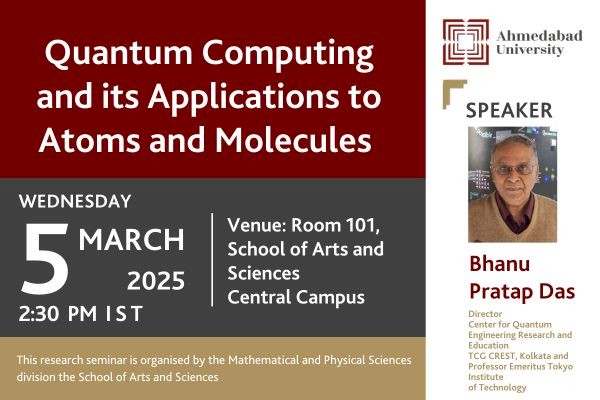
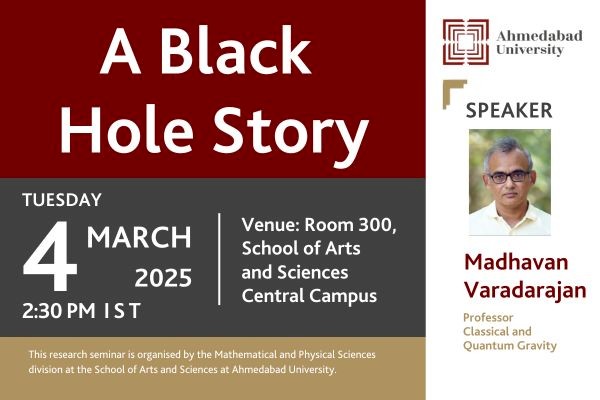
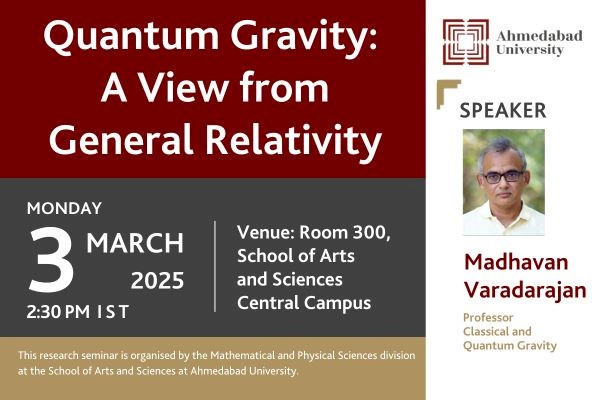
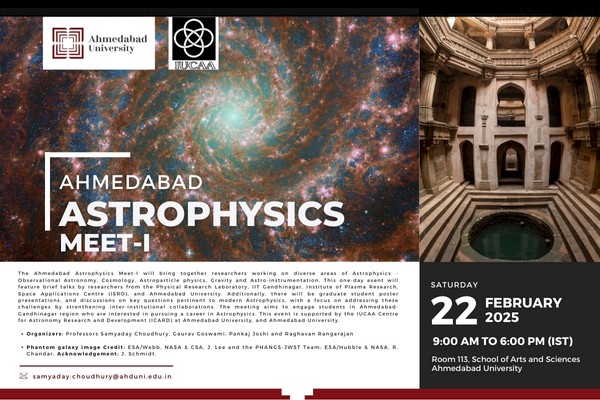
All Events

Our Alumni
Higher Education
Many BS (Honours) in Physics students opt for pursuing higher studies after graduation. Below we list our alumni who have been admitted to Masters and PhD programmes after completing the BS (Honours) in Physics at Ahmedabad University.
Sree Pujitha Suribhatla, BS (Honours) in Physics, Class of 2023, Erasmus Mundus Joint Masters in Astrophysics programme
Kharanshu Solanki, BS (Honours) in Physics, Class of 2023, University of Vienna
Alen Kuriakose, BS (Honours) in Physics, Class of 2023, KU Leuven in Belgium
Omkar Deshpande, BS (Honours) in Physics, Class of 2023, Ludwig Maximilian University of Munich
Nikhita Gautam, BS (Honours) in Physics, Class of 2023, University of Cologne
Laksh Gupta, BS (Honours) in Physics, Class of 2024, University of Bonn
Akhil Mundaplackal, BS (Honours) in Physics, Class of 2024, University of Minnesota at Twin Cities
Krishali Shah, BS (Honours) in Physics, Class of 2025, University of Padua