6 October 2025
An Alumna's Research Challenging Global Heritage Frameworks Secures the Dean's Distinguished Award at UC Riverside
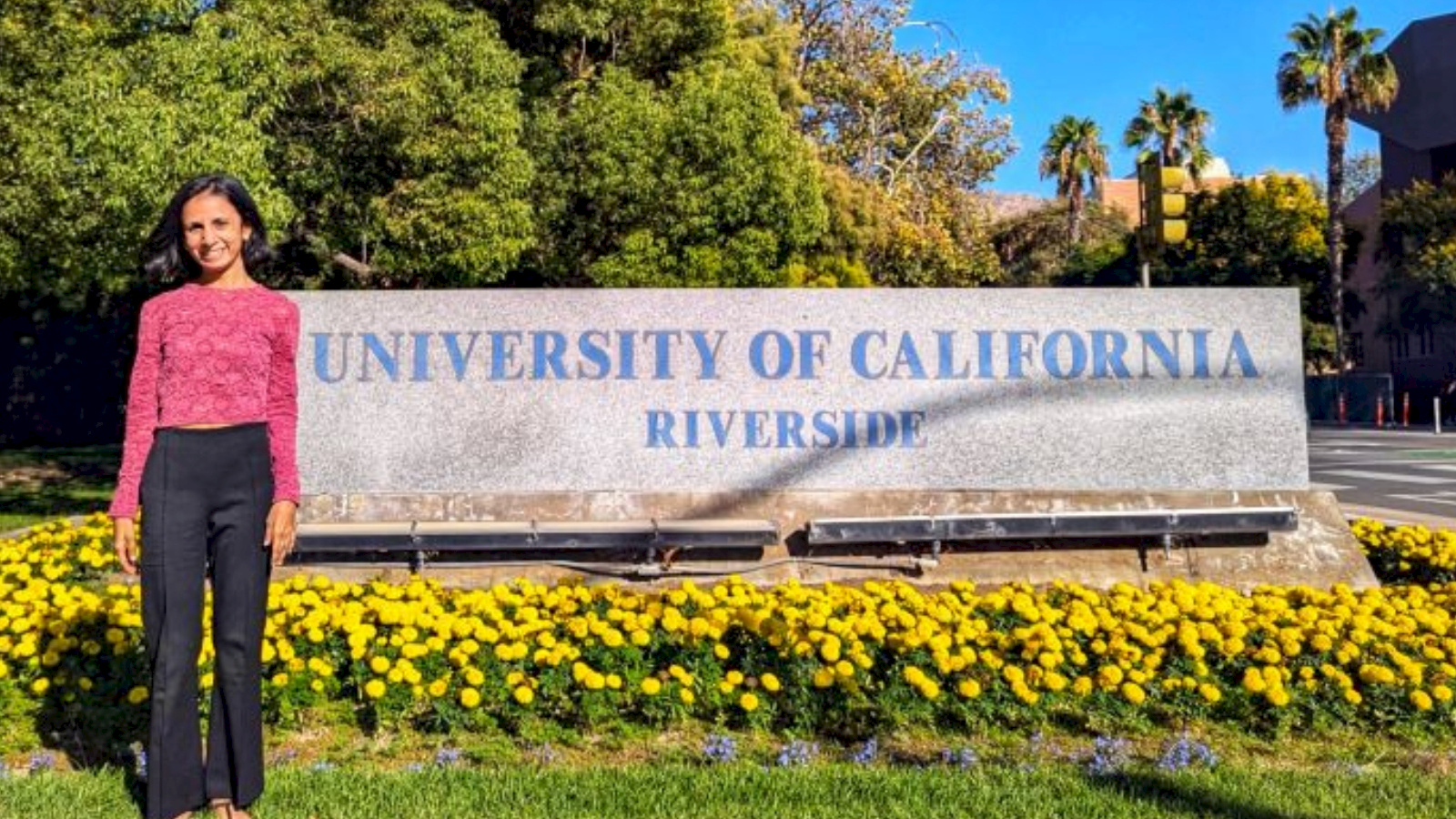
When Bhumi Shah joined Ahmedabad University in 2013 as a student and later took on the role of an employee in 2018, both she and the University were early in their journeys, still taking shape and learning to grow by stretching across disciplines. As the University expanded its intellectual horizons and embraced increasingly interdisciplinary forms of inquiry, Bhumi’s own academic path evolved in parallel.
While studying global and world heritage frameworks during her graduate studies at Ahmedabad University, Bhumi Shah experienced a recurring tension between the international heritage designations and the lived experiences of practitioners and local communities. Sacred sites of deep cultural and religious significance are often recognised as "World Heritage Sites," yet the living traditions that animate them often remain invisible.
That unresolved tension remained with her, eventually laying the foundation for her doctoral research at the University of California, Riverside, with the support of the Dean's Distinguished Award. "My work asks whether such spaces might be understood differently," Bhumi explains.
"Instead of viewing them only as heritage sites, I draw on the Indian concept of kṣetra, which could be explained as living domains of pilgrimage and practice. I look at how everyday actions, rituals, and ideas sustain these spaces, and what this reveals about sacred geography, community, and continuity."
Her journey with Ahmedabad University began first as a student and later as a faculty member. She completed an Integrated Master's in Computer Applications before transitioning to the creative and cultural questions that drew her to the Master of Management Studies programme, specialising in heritage. The combination of technical training and cultural inquiry shaped her professional path, leading her into digital heritage projects with IT start-ups, museums, and institutions such as the Archaeological Survey of India and the Rajasthan State Government.
Teaching at the University became an equally formative chapter. Designing interdisciplinary courses in interactive media and science communication meant creating classrooms that bridged the disciplines of engineering, physics, biology, management, arts, psychology, and life sciences, allowing students to find common ground.
"These courses taught me as much as they taught the students," she reflects. "I learned how to mentor across disciplines, how to design research-based pedagogies, and how to guide projects that balance rigour, creativity, and sensitivity to how different fields produce knowledge."
Her work with research centres broadened her understanding of academic practice itself, extending beyond scholarly writings to encompass music albums, documentaries, immersive workshops, and other forms that make scholarship accessible to diverse audiences. "It also exposed me to the practical dimensions of institution-building. I understood what it means to create an intellectual identity for a new centre and articulate its place in a larger academic ecosystem," shares Bhumi.
These experiences collectively strengthened her methodological and analytical instincts. Collaborating with faculty across ecology, literature, engineering, and other disciplines helped her develop what she calls an interdisciplinary "muscle", a way of thinking that is grounded yet open to unexpected connections.
Receiving the Dean's Distinguished Award at UC Riverside feels, to her, like both recognition and responsibility. "The award supports incoming scholars with promising trajectories," she says. "For me, it offers the time and focus to deepen my research across the University system. In many ways, it continues the interdisciplinary journey I began back at Ahmedabad University that taught me how to ask questions, how to see across fields, and how to carry curiosity forward with care."