11 September 2026
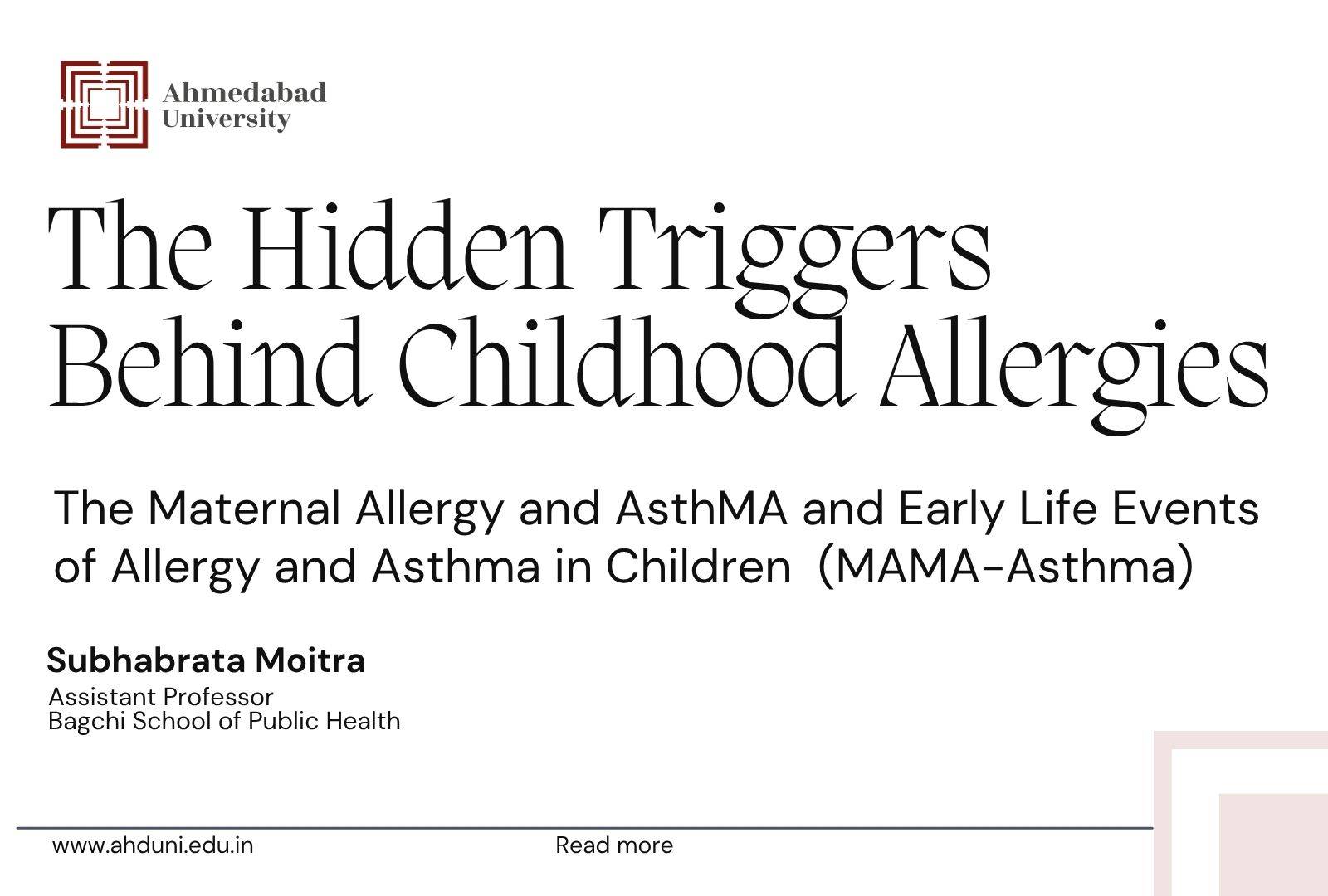
The Hidden Triggers Behind Childhood Allergies
Allergic airway diseases such as asthma and allergic rhinitis (hay fever) are among the most common health conditions affecting preschool children. Understanding why some children develop these conditions requires looking beyond childhood itself. Factors that begin before birth and extend across generations may also play a role.
Professor Subhabrata Moitra of the Bagchi School of Public Health is examining how maternal asthma and allergy during pregnancy may influence the development of allergic airway diseases in children. His study will consider factors such as the severity of maternal disease, symptom control, and medications used during pregnancy. It will also explore the role of paternal asthma and allergy and their association with childhood health outcomes.
The study will further examine whether pregnancy-related complications associated with maternal asthma and allergy, such as preterm birth and low birth weight, may increase the risk of allergic airway diseases in children. Researchers will also examine the roles of social determinants of health and environmental factors. These include socioeconomic status, urban or rural residence, air pollution, and access to green spaces.
Professor Moitra, along with researchers from the University of Alberta, has received funding from the Canadian Institutes of Health Research (CIHR) for this study. The Maternal Allergy and AsthMA and Early Life Events of Allergy and Asthma in Children (MAMA-Asthma) study will use data from the Alberta Pregnancy Outcomes and Birth Events (PrOBE) registry. The registry contains information on approximately 5,00,000 women who gave birth to around 9,00,000 children in Alberta between 2005 and 2024. The researchers will also link fathers’ data to the registry, enabling them to examine allergy and asthma across generations.
The study builds on Professor Moitra’s earlier research, “Maternal Asthma and Adverse Perinatal Outcomes: An Analysis of 434,068 Pregnancies in Canada,” conducted with researchers from the University of Alberta and other institutions. The study examined the relationship between maternal asthma and outcomes, including preterm birth and low birth weight. Its findings provided the basis and pilot data for the MAMA-Asthma project.
MAMA-Asthma takes this research further by looking beyond the immediate outcomes of maternal asthma during pregnancy. It will examine how maternal and paternal health, pregnancy, early-life events, and environmental conditions together influence a child’s risk of developing allergic airway diseases.
“Our study will clarify how both maternal and paternal asthma and allergy contribute to a child’s risk of developing allergic airway diseases, providing essential evidence to guide more effective prevention and early intervention strategies across generations,” said Professor Moitra.
By bringing together data on parental health, pregnancy, birth outcomes, social conditions, and environmental exposures, the study aims to generate evidence for more accurate identification of children at elevated risk. The findings could also inform targeted prevention and early intervention strategies in clinical and public health practice. The research builds on Professor Moitra’s work in asthma and respiratory health and reflects the Bagchi School of Public Health’s focus on generating evidence to inform health practice and policy.