9 July 2025
Managing Petrochemicals Business in an EV Era
What the future might look like if the government’s emphasis on electric vehicles continued to grow. What would happen to the fuel industry then? This question opened up a larger inquiry into petrochemicals, a sector overshadowed by debates on fuel but central to the global economy.
While crude oil and gas are commonly associated with petrol and diesel, petrochemicals represent a different story. They form the base for countless products, including plastics, packaging, textiles, cosmetics, medical equipment, and everyday items like furniture and paper.
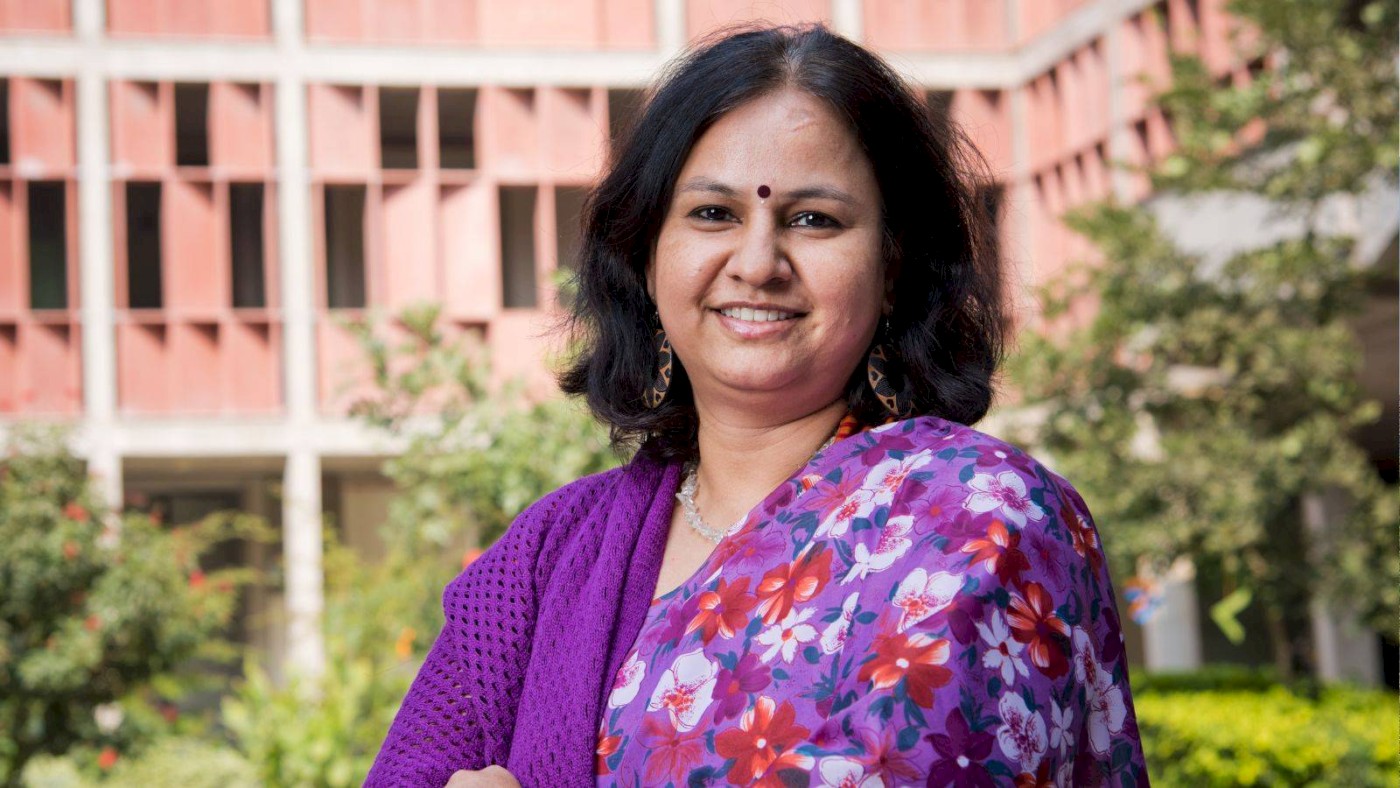
That realisation became the seed of a project, the idea for the book Managing Petrochemical Business, co-authored by Professor Sonal Yadav from Ahmedabad University’s Amrut Mody School of Management and Professors Pramod Paliwal and Sudhir Yadav from Pandit Deendayal Energy University (PDEU). Together with her co-authors, she explored how petrochemical business could be framed not only in terms of production but also in terms of managerial complexity, competitiveness, and sustainability.
"When I first visited the Reliance Refinery in Jamnagar with students, I was surprised by the vast display of petrochemical by-products," Professor Yadav shares. "It made me realise that without petrochemicals, our daily lives would look entirely different."
As an economist, Professor Yadav brings a unique perspective to the project. "The industry contributes immensely to economic growth but is also tied to evolving consumer demands, global market dynamics, and environmental challenges. We wanted to show the petrochemical sector not as a niche for chemical engineers alone but as an integral part of modern business and policy."
The journey from idea to published book was rigorous. They visited healthcare, plastics, and construction industries to include real-world case studies, ensuring that the book went beyond theory. The final work covers not just supply chains and markets but also safety and environmental concerns, making it relevant to a wide readership.
The book also discusses the global shifts toward electric mobility, and the demand for petrol and diesel is projected to decline in the coming decade. Yet, demand for petrochemicals is expected to surge, fuelled by rapid infrastructure development, rising living standards, and the growing need for packaging and construction materials.
“In India, the government’s investment in infrastructure is accelerating,” Professor Yadav notes. “That means demand for petrochemical-based materials will only increase, even as traditional fuels phase out. Understanding this balance is critical for business leaders, policymakers, and researchers alike.”
Similarly, in healthcare, several petrochemicals are used in making diagnostic labs and/or medical consumables, aesthetic and/or trichology clinics, and rapid diagnostic kits.
Managing Petrochemical[S1] s Business thus offers more than an industry overview. It provides a framework to understand how the sector intersects with economics, sustainability, and global competitiveness, while anticipating the opportunities and challenges ahead. It is both a timely reference and a call to rethink how we view petrochemicals.
The book presents multiple case studies illustrating how industries implement safety measures and ensure compliance with established norms. It also highlights the growing role of technology in mitigating environmental impact. From reducing harmful emissions to enhancing workplace safety, advanced technologies enable more sustainable industrial practices.
Many companies are now investing heavily in dedicated research and development units to design cleaner, safer processes. Beyond health and safety, the book expands the conversation to Environmental, Social, and Governance (ESG) dimensions.
The key takeaway for students and readers of the book is that it offers a practical, interdisciplinary understanding of how the petrochemical industry operates, covering supply chains, market growth, and real-world applications across healthcare, packaging, and infrastructure. Readers will gain insights into how this industry drives everyday life, how it is evolving with sustainability and innovation, and how business, management, and engineering intersect to shape its future.