11 January 2026
India’s Path to Viksit Bharat 2047 Relies on Inclusion, Climate Resilience, AI, and R&D, Concur Economists
India’s journey towards Viksit Bharat cannot be measured by GDP growth alone. The road to 2047 runs through higher investment, stronger state capacity, and faster, more effective implementation. In an era where uncertainty has become the defining condition of economic decision-making, understanding how economies adapt, grow, and remain inclusive has never been more critical. Equally central are India’s investment in research and development, preparedness for an AI-driven economy, and commitment to inclusive and climate-resilient growth.
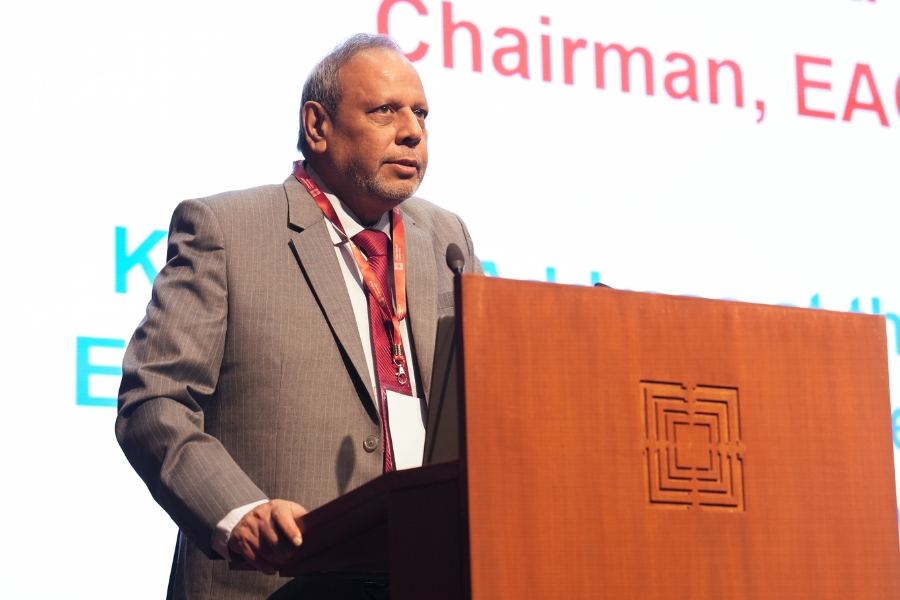
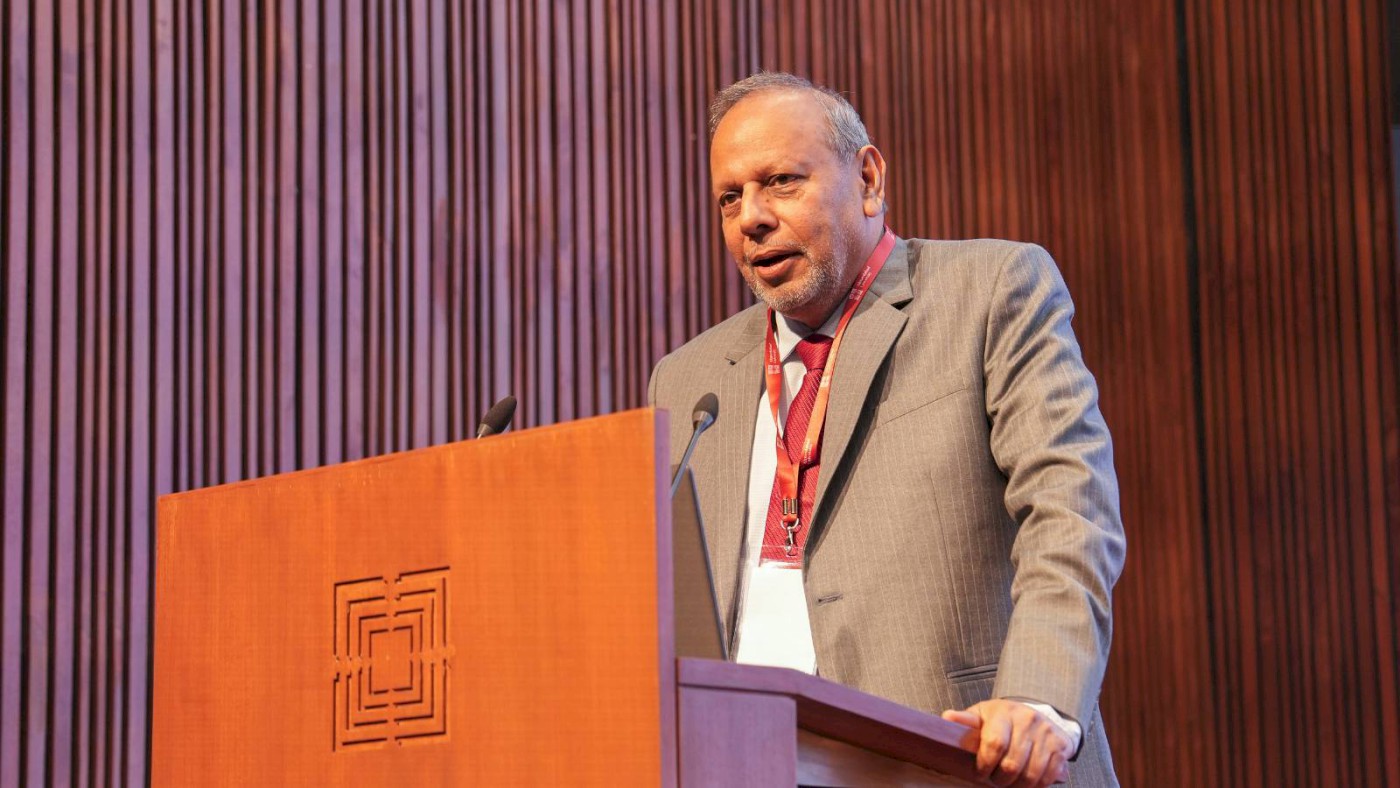
Against this backdrop, the Seventh Annual Economics Conference at Ahmedabad University brought together scholars, policymakers, and researchers to reflect on India’s economic trajectory and the global forces shaping it. Professor S. Mahendra Dev, Chairman of the Prime Minister’s Economic Advisory Council, set the intellectual direction of the conference through his inaugural address, “Indian Economy: Growth, Inclusion and Sustainability.” In his remarks, he engaged with the central question of how India can grow faster, more equitably, and sustainably in a world marked by perpetual uncertainty.
Artificial intelligence, he noted, is no longer merely a technological shift but an economic planning challenge that will shape productivity, employment, and climate outcomes. A recurring concern highlighted in his address was India’s persistent underinvestment in research and development, which has emerged as a structural weakness in the country’s growth trajectory. The idea of Atmanirbhar Bharat, he emphasised, does not advocate import substitution, but rather the creation of competitive capacity through innovation and research.
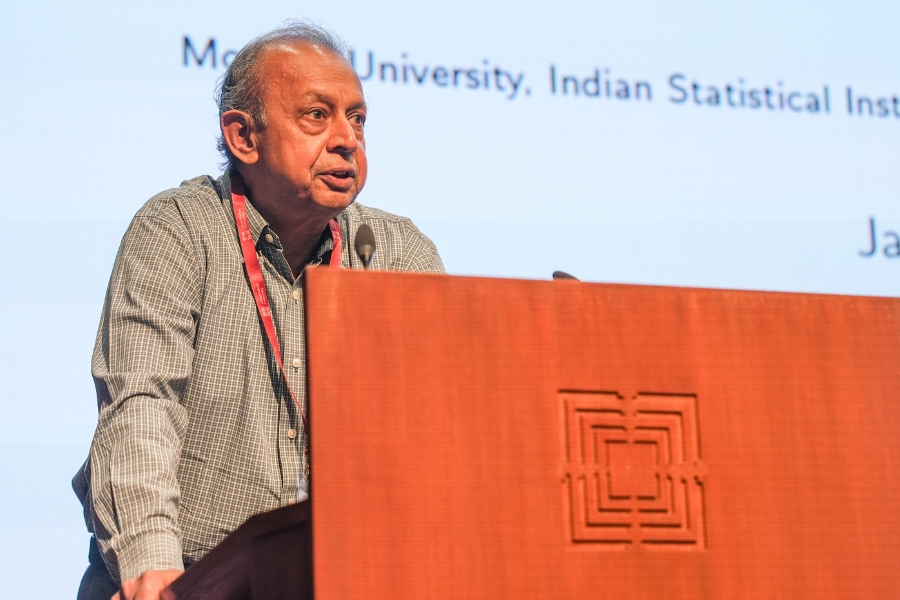
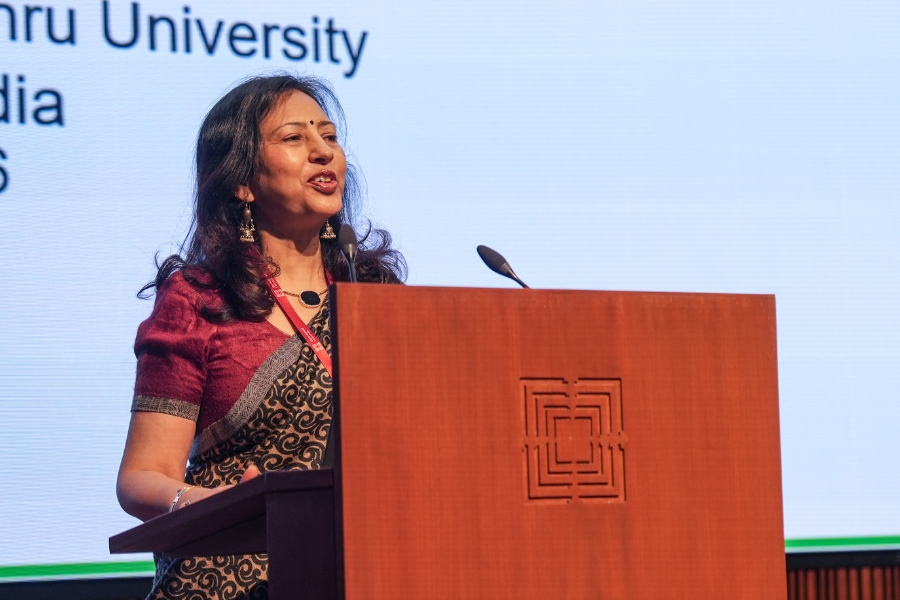
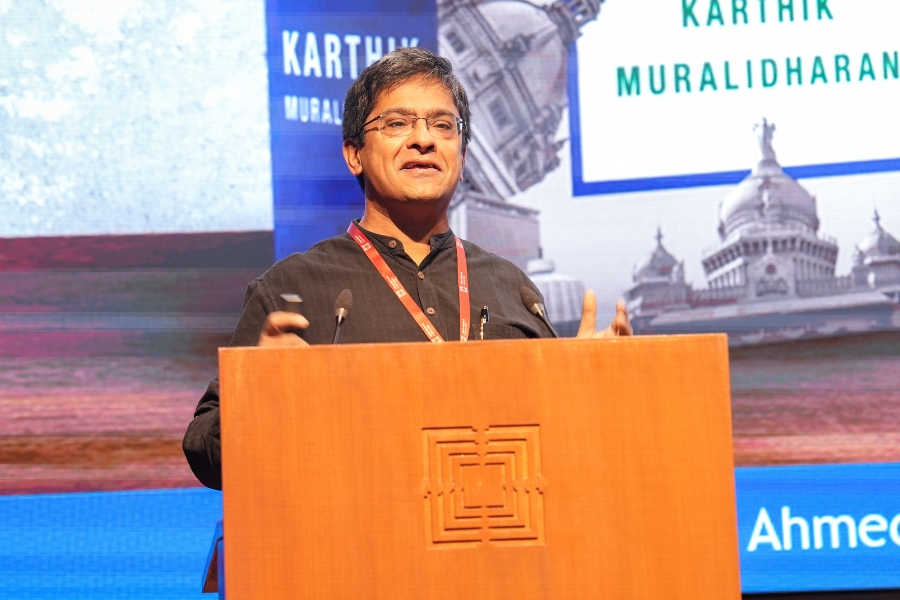
The conference featured a distinguished line-up of leading economists whose work spanned development, governance, markets, and climate policy. Professor Dilip Mookherjee (Boston University, USA) examined market inefficiencies through a study of agricultural supply chains in India, while Professor Ravi Kanbur (Cornell University, USA) addressed the role of taxation and social protection systems in developing economies during crises. Professor Sangeeta Bansal (Jawaharlal Nehru University, India) presented evidence-based insights on air pollution and policy design, and Professor Karthik Muralidharan (University of California, San Diego, USA) outlined a state-led roadmap to accelerate India’s development and improve governance.
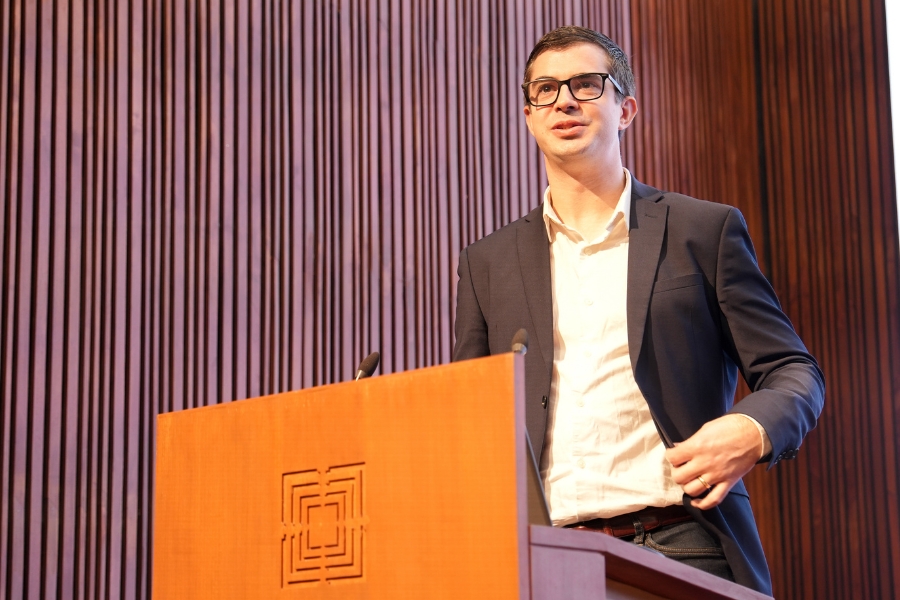
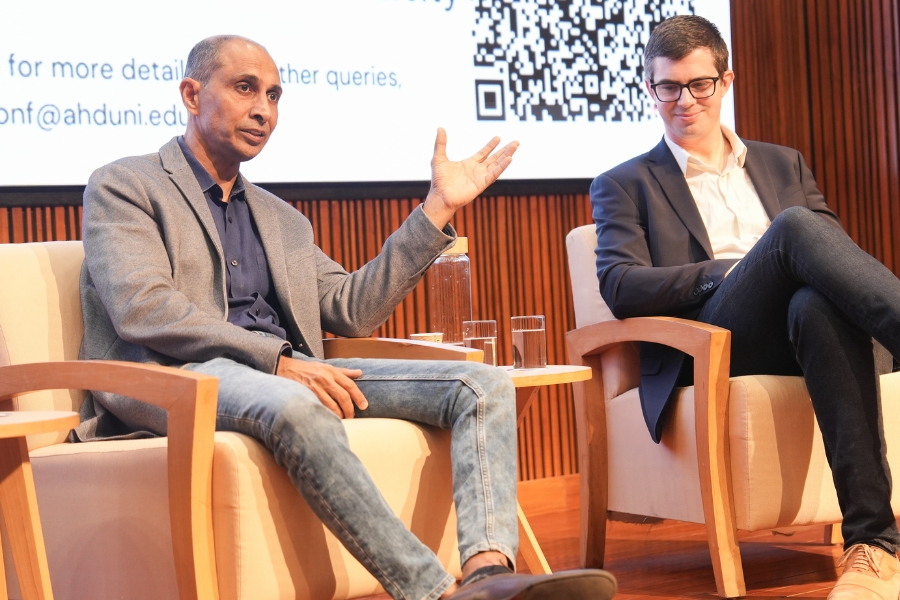
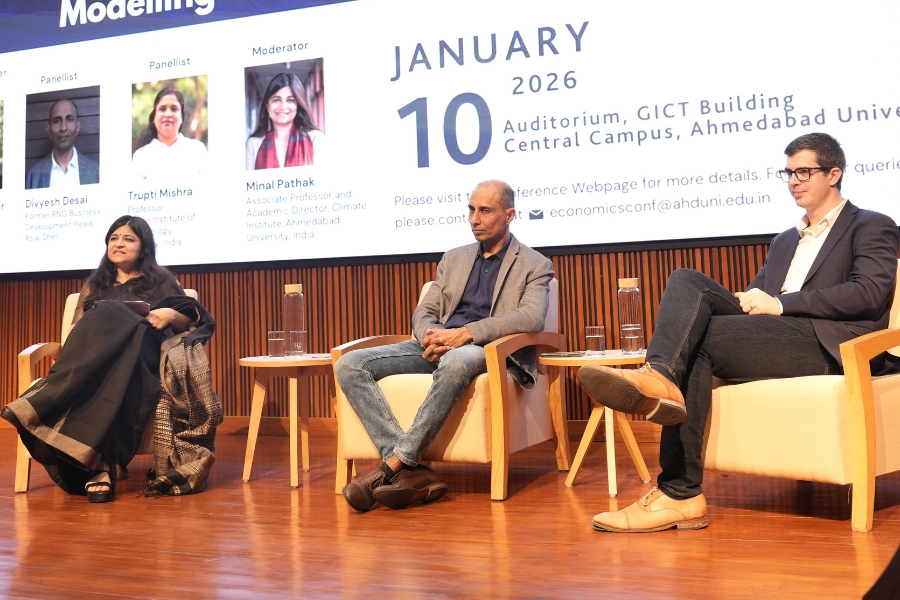
Climate–economy linkages were further foregrounded by Professor Jonathan Colmer (University of Virginia, USA), whose keynote on carbon border adjustment mechanisms was followed by a panel discussion on carbon pricing and climate–economy modelling. The panel was moderated by Professor Minal Pathak (The Climate Institute, Ahmedabad University), with panellists Divyesh Desai (Former RNG Business Development Head Asia, Shell) and Professor Colmer.
With 100 papers presented over two days, the Seventh Annual Economics Conference offered insights into some of the most pressing economic challenges of our time. Beyond catalysing conversations, the conference surfaced new research, recognised outstanding scholarship, and connected early career researchers with a wider community of economists and policy thinkers, reflecting the breadth and depth of contemporary economic research.
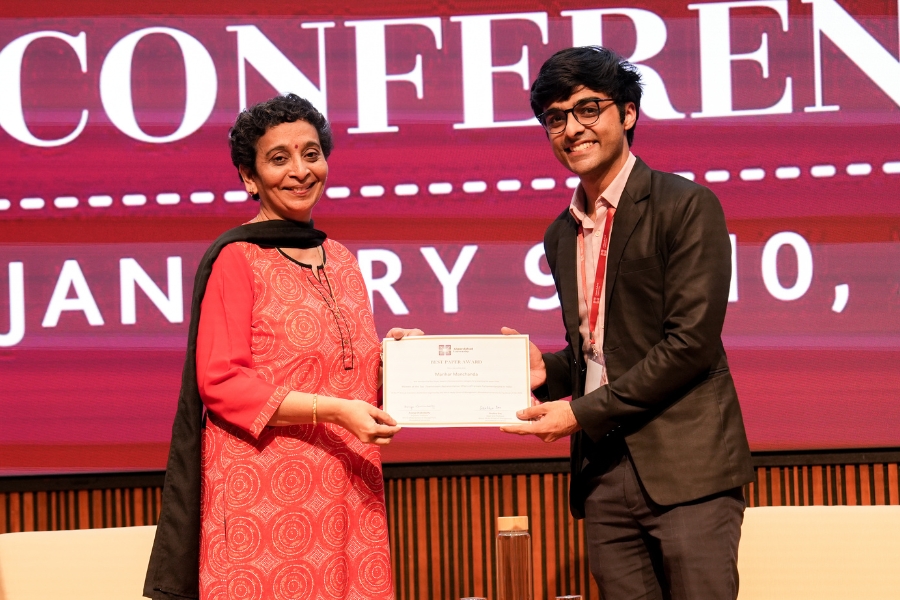
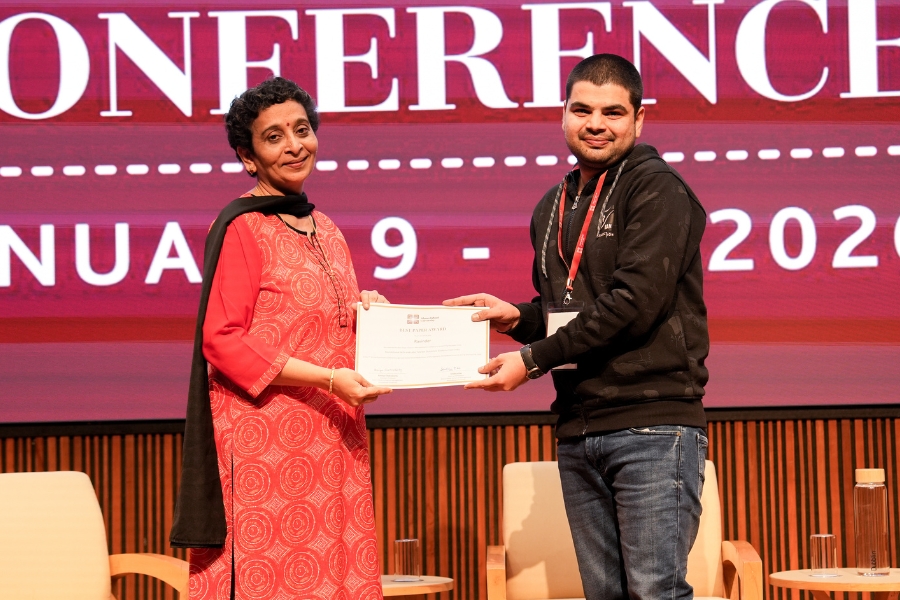
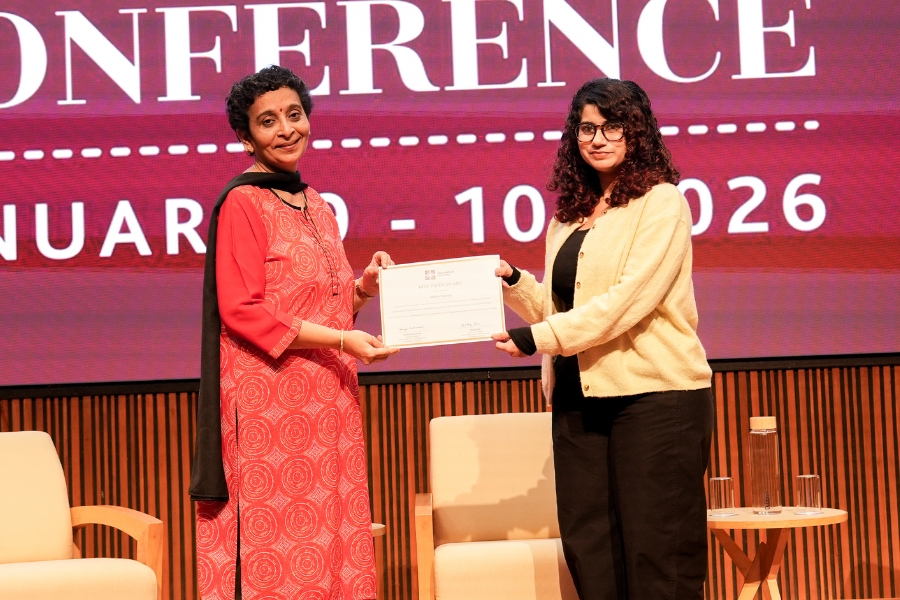
Students were recognised with Best Paper Awards across categories. In Microeconomics, the award was jointly conferred on Ravinder for Foundational Skills and Labour Market Outcomes: Evidence from India and Manhar Manchanda for Women at the Top: Downstream Representation Effects of Female Parliamentarians in India. The Macroeconomics award was presented to Meenakshi Shekhar for Sluggish Growth or Premature Decline? A Comparative Study of Indian Industrialisation with China. In Agriculture, Environment, and Resource Economics, Ishita Varma was recognised for Forest Rights, Dietary Diversity, and Nutritional Security of Tribal Communities: Evidence from India.
In her closing remarks, Professor Shobha Das, Dean of the Amrut Mody School of Management, highlighted the conference’s academic depth and encouraged young researchers to view it as the beginning of their research journeys. She also lauded the conference’s role in strengthening Ahmedabad University’s standing as a research-driven institution.
With contributions spanning 15 subfields of economics, the diversity of perspectives offered a comprehensive view of the discipline’s evolving concerns. The conference reflected both intellectual rigour and expansive scope, reaffirming its role as a space for rigorous inquiry and meaningful exchange.