
30 September 2026
Beyond Livelihoods: Research on the Social Impact of Women’s Cooperatives
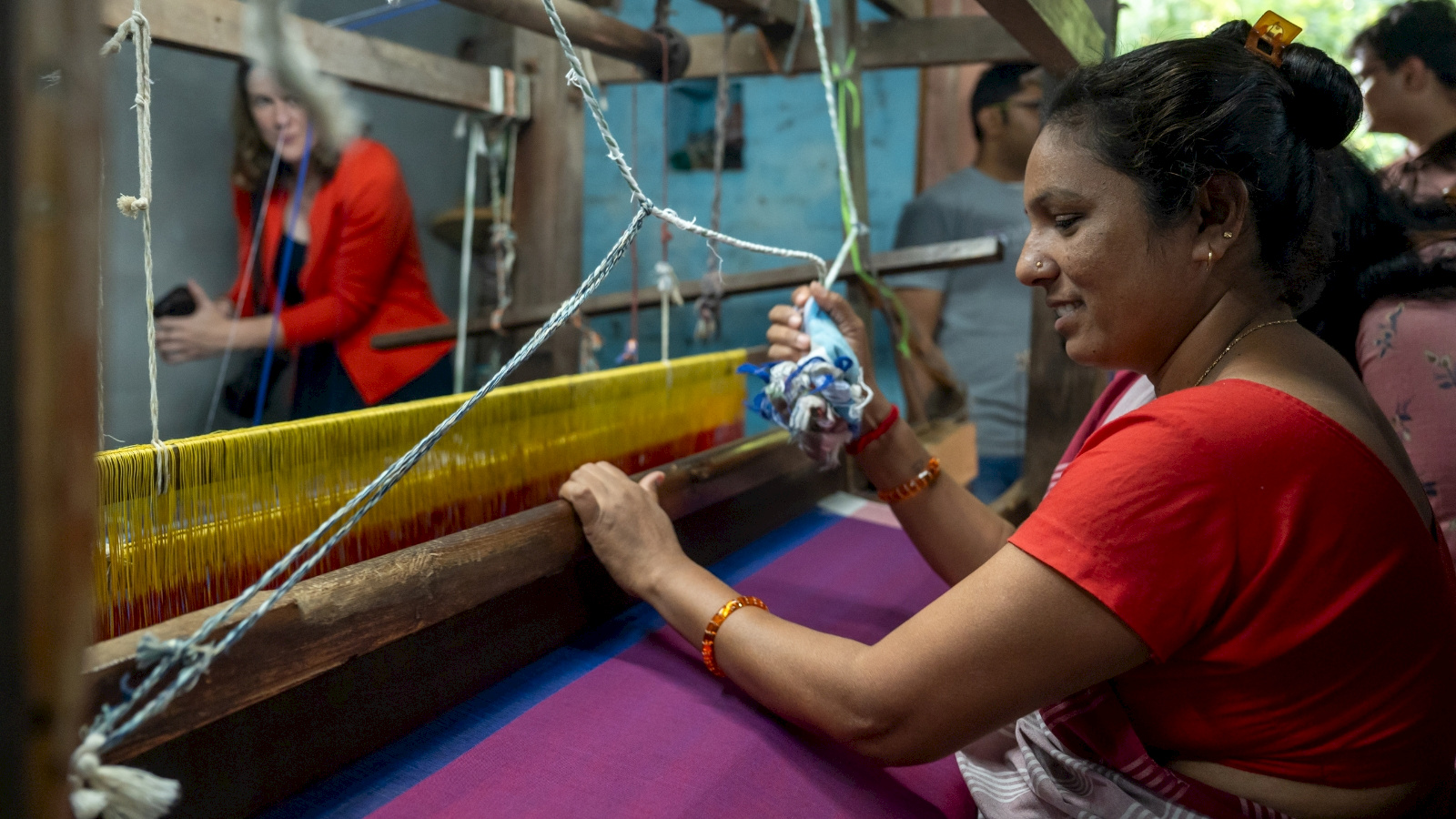
Cooperatives have traditionally helped create livelihoods and economic opportunities by bringing people together around shared interests. But their impact may extend beyond the economic sphere. By creating spaces for collective decision-making, shared responsibilities, and mutual support, cooperatives may also influence how individuals cooperate, support, and engage with their communities. A new international research project involving Ahmedabad University professors Aranya Chakraborty and Abhinandan Sinha will examine whether participation in women’s cooperatives can shape these pro-social behaviours.
To explore this question, the research will use lab-in-the-field experiments in Gujarat that focus on understanding whether participation in women’s cooperatives shapes participants’ altruistic preferences. By doing so, it will connect women’s economic participation to broader questions about social capital, collective action, and community behaviour.
Gujarat provides a highly relevant setting for the research because of its long history and scale of cooperative organisation, particularly in the dairy sector. The state has been central to India’s cooperative dairy movement, with women forming a substantial part of its producer base. This established ecosystem provides an opportunity to examine whether participation in collective economic organisations can influence interactions and behaviour beyond their immediate economic outcomes.
The research project, “Women’s Cooperatives, Altruism, and Pro-sociality,” has received an Insight Development Grant from the Social Sciences and Humanities Research Council of Canada (SSHRC) for a two-year period. Professors Aranya Chakraborty and Abhinandan Sinha are co-applicants on the project, which is led by Professor Sonia Laszlo of McGill University. The collaboration brings together researchers from Ahmedabad University and McGill University to advance understanding of how women’s economic participation intersects with cooperation, social behaviour, and community-level outcomes. The study offers new perspectives on the broader social impact of women’s cooperatives.