17 July 2026
Professor Ratna Ghosal Honoured at ASEAN-India Conclave for AI-Driven Crocodile Tracking Research
Knowing how many animals inhabit an ecosystem is only part of understanding a species. Identifying and following individuals over time can reveal patterns of movement, population dynamics, and habitat use that are critical to conservation. Conventional approaches to individual identification, however, can be invasive and logistically demanding.
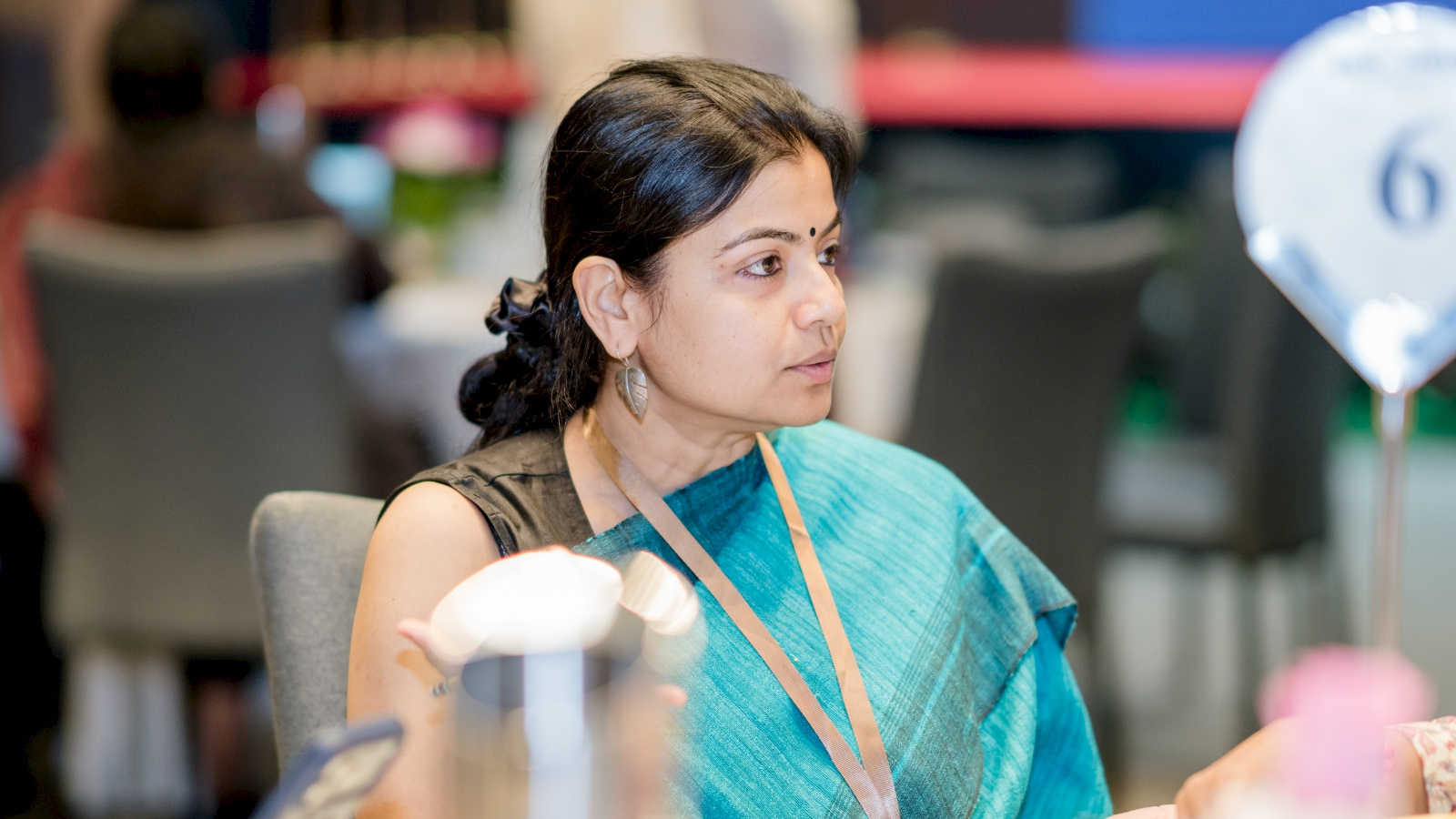
An AI-powered approach to address this challenge has earned Professor Ratna Ghosal the Best Presentation Award in the Emerging Technology category at the 2nd ASEAN-India Women Scientists Conclave, held in Cambodia.
The research uses artificial intelligence and deep learning to identify individual mugger crocodiles through their unique dorsal scute patterns. The model has demonstrated accurate individual-level classification, offering a non-invasive approach to wildlife monitoring.
The collaborative research involves Professors Mehul Raval and Jayendra Bhalodiya from the School of Engineering and Applied Science, Ahmedabad University, and is led by postdoctoral fellow Sagar Chavda. The team is currently working on reidentification challenges, with the aim of developing the tool into a field-ready application.
Once developed, the technology could support longitudinal tracking of individual crocodiles and generate insights into population dynamics, movement and migration patterns, while also aiding conservation efforts in areas where human-crocodile interactions are a concern.
Professor Ghosal was among 20 women scientists selected by the Department of Science and Technology (DST), Government of India, to represent India at the conclave. The event was hosted by Cambodia’s Ministry of Industry, Science, Technology and Innovation (MISTI) in collaboration with IIT Gandhinagar, the ASEAN Secretariat and DST, with support from the ASEAN-India Science and Technology Development Fund (AISTDF).
The recognition underscores the potential of interdisciplinary research that brings together AI, deep learning and wildlife science to address challenges in biodiversity monitoring and conservation.