2 April 2026
Combining Molecular Targeting and Drug Therapy to Treat Chronic Inflammation in Rheumatoid Arthritis
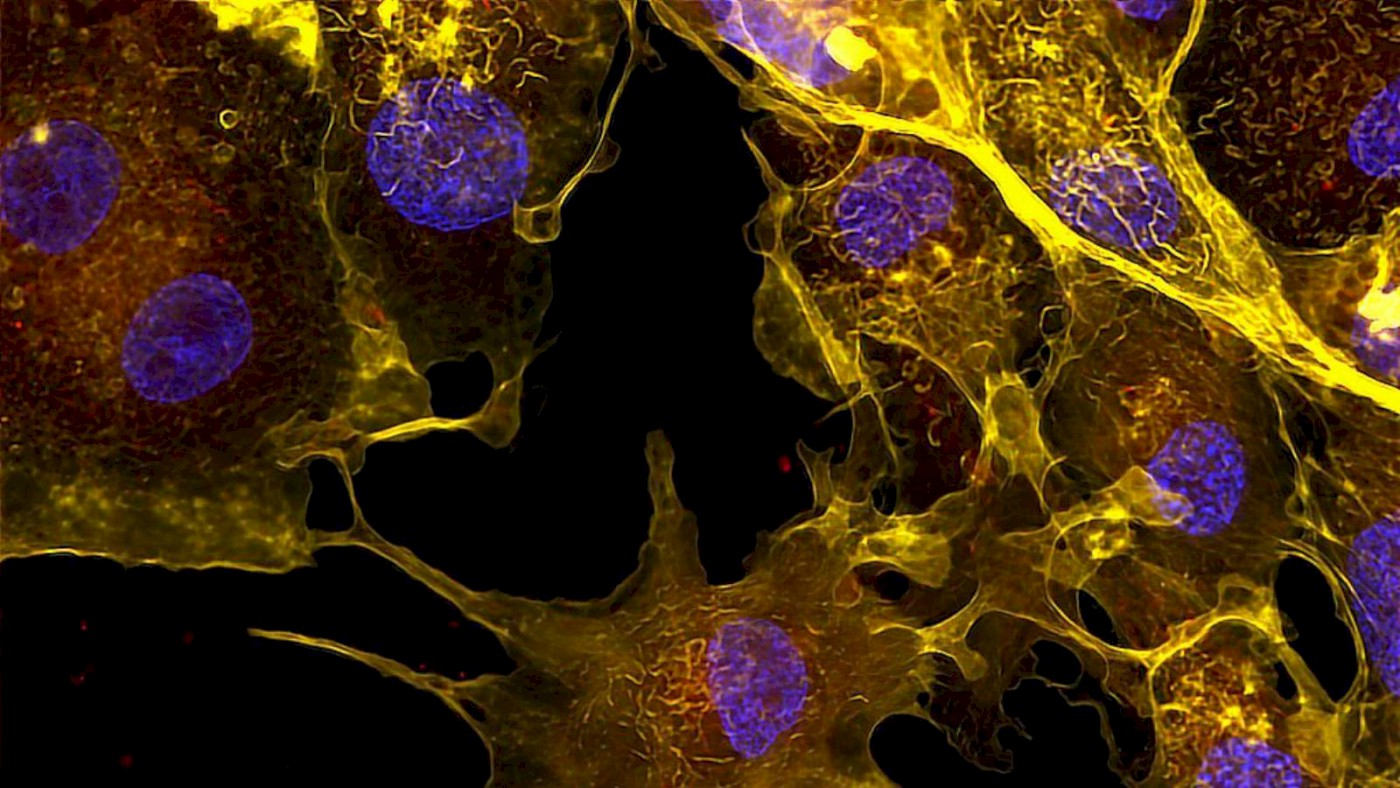
Joint pain can evolve into a lifelong battle, as it drives chronic inflammation that does not remain contained. It can spread to affect vital organs and significantly increase the risk of cardiovascular complications. This is the reality of Rheumatoid Arthritis (RA), a complex autoimmune disorder that continues to challenge conventional medicine.
While current therapies suppress visible symptoms, they fail to address the deeper molecular triggers, allowing inflammation to persist. Current treatment suppresses downstream inflammatory signals while leaving upstream molecular drivers active. Over time, this unchecked process can lead to irreversible damage, leaving patients in a progressively debilitating and potentially fatal condition.
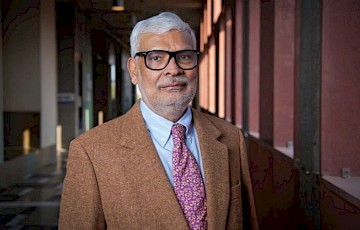
Ashutosh Kumar, Associate Professor at the School of Arts and Sciences at Ahmedabad University, is developing a next-generation treatment approach for RA. His research takes a fundamentally different direction. Instead of targeting isolated pathways, it focuses on three critical molecular regulators (NLRP3, STAT3, and IL-6) that lie at the core of this inflammatory network. This approach aims to disrupt the cycle that drives chronic inflammation in RA by simultaneously targeting these upstream nodes.
This strategy could offer a much-needed alternative for patients who have developed resistance to existing treatments. It represents a shift in how autoimmune diseases are treated from simply suppressing inflammation to actively reprogramming the immune system at its source. “Most therapies today are designed to manage the symptoms of inflammation,” Professor Kumar explains. “What we are trying to do is intervene at its molecular roots where the disease actually begins to break the cycle rather than just control it.”
This research has received support under the Research Support Scheme 2025–26 of the Gujarat State Biotechnology Mission (GSBTM), an initiative of the Government of Gujarat that promotes advanced research and innovation in biotechnology.
The work is based on an advanced nanodelivery system designed for precise and controlled treatment. It uses specially designed carriers, called immunoliposomes, that respond to the diseased joint environment and deliver medicines exactly where they are needed. These are functionalised liposomes encapsulating drugs and siRNA in their different layers, ensuring the release of the drug in a controlled manner inside the target cells. Together, this system delivers both small interfering RNAs (siRNAs) and disease-modifying drugs, such as methotrexate, directly to the key cells involved in rheumatoid arthritis. This combined approach enhances effectiveness by allowing molecular targeting and drug therapy to work together. It aims to improve outcomes while reducing drug dosage and side effects.
The innovation’s ability to respond to the disease environment allows controlled drug release and better absorption. It may reduce dosage while maintaining effectiveness, and its long-term stability reduces the need for cold storage, making the treatment more accessible and practical for real-world use.
Reflecting on the support, Professor Kumar notes that it enables high-risk, high-reward research, transforming theoretical ideas into meaningful real-world impact. “The work brings together multiple scientific disciplines to address complex challenges like rheumatoid arthritis, while accelerating the transition from laboratory discoveries to practical applications,” he says.
His work also reflects Ahmedabad University’s strong emphasis on interdisciplinary research. “The research ecosystem here supports curiosity-driven science,” he adds. “It creates an environment where collaboration and innovation come together to translate ideas into real-world impact.”
Professor Kumar’s work extends beyond rheumatoid arthritis and holds potential for a range of chronic inflammatory diseases that share similar molecular pathways. Additionally, it signals a shift from incremental treatment improvements to a future of precision medicine, where diseases are not merely managed but addressed at their very source.