Friday
13
March 2026
2:30 - 4:00 PM IST
Location
Room 209, School of Arts and Sciences
Central Campus
Share
Not all Processing-Bodies Form Equally
Arts and Sciences Research Seminar Series
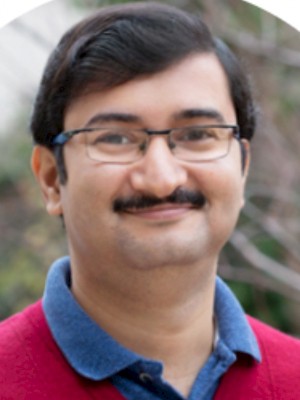
Debdatto Mookherjee
Postdoctoral Fellow
University of Basel
Switzerland
Speaker
Translational repression enables rapid adaptation to environmental change. During stress, translationally repressed mRNAs and mRNA decay factors accumulate in cytoplasmic processing bodies (PBs), which contribute to mRNA storage and turnover. PBs are well characterised in yeast glucose starvation, but less so under other stresses. We show that the extent of translation attenuation correlates with PB brightness, material properties, and recruitment of core components. Strong translation attenuation produces few, intense, more fluid PBs that recruit decay factors en bloc, whereas weaker attenuation yields many dimmer, more viscous PBs with sequential protein recruitment. Increasing the pool of non-translated mRNAs enhances the intensity of dim PBs and accelerates decay machinery recruitment. Consistently, elevating RNA levels enlarges Dhh1 helicase–containing droplets in vitro. We propose that non-translated mRNA abundance governs PB assembly pathways and biophysical states, thereby tuning the engagement of mRNA decay under stress.
Speaker
Debdatto Mookherjee
Debdatto Mookherjee is a postdoctoral fellow in the laboratory of Prof. Anne Spang at the Biozentrum, University of Basel, where he studies the stress-induced assembly and function of processing bodies (P-bodies). His work integrates quantitative live-cell imaging with chemical crosslinking–based affinity purification (cCLAP) coupled to proteomics and RNA-sequencing in yeast. His research has been supported by a Marie Skłodowska-Curie Individual Postdoctoral Fellowship (2021–2023), a grant from the Swiss Life Foundation (2024), and the University of Basel Research Fund for Junior Researchers (2025–2026).
Before moving to Switzerland, Debdatto completed his PhD in the Biophysics and Structural Genomics Division at the Saha Institute of Nuclear Physics (Kolkata) under Prof. Oishee Chakrabarti. There, he investigated endoplasmic reticulum quality-control pathways, including ER-phagy/reticulo-mitophagy and ESCRT-dependent ER remodeling.