Wednesday
28
October 2026
4:00 - 5:30 PM IST
Location
Room 008, Amrut Mody School of Management
Central Campus
Share
Bridging Ecology and Society to Conserve the Snow Leopard and the High Mountains of Asia
Arts and Sciences Lecture Series
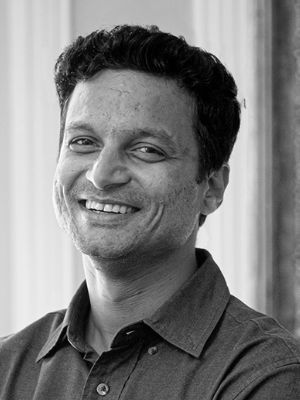
Kulbhushansingh Suryawanshi
Scientist
Nature Conservation Foundation
Speaker
How do we conserve rare and endangered species in a globalised world? The snow leopard is often thought of as an elusive carnivore inhabiting some of the most remote mountains on Earth. Yet its future, and that of the ecosystems it inhabits, is increasingly shaped by forces far beyond the high mountains of Asia. Drawing on two decades of ecological research and conservation practice, I explore several assumptions that underpin snow leopard conservation. How many snow leopards are there, and does it matter? Is livestock grazing – the predominant land use in this region – beneficial or harmful for snow leopard conservation? More broadly, how should we understand our relationship with large carnivores and the human communities that share their landscapes? I will confront some of the commonly held assumptions with data and published research and discuss my experiences as a conservation practitioner while reflecting on my role as a scientist trying to balance the contradictions that sometimes arise between ecology and society.
Speaker
Kulbhushansingh Suryawanshi
Kulbhushansingh Suryawanshi is a conservation scientist and ecologist specialising in snow leopard conservation and human–wildlife coexistence in the high Himalaya. As Director of the India Program at the Snow Leopard Trust and a scientist at the Nature Conservation Foundation (NCF), he works to mitigate human–wildlife conflict through interdisciplinary research and community-based conservation. He is a National Geographic Explorer and received the British Ecological Society’s Southwood Prize in 2013.