Wednesday
30
September 2026
2:30 - 4:00 PM IST
Location
Room 209, School of Arts and Sciences
Central Campus
Share
Research Directions in Indian History
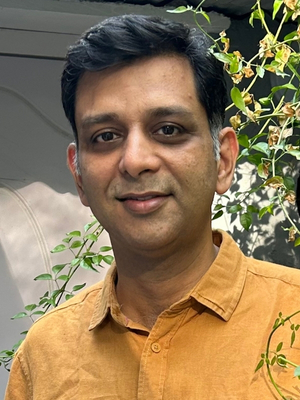
Aparajith Ramnath
Associate Professor
School of Arts and Sciences
Speaker
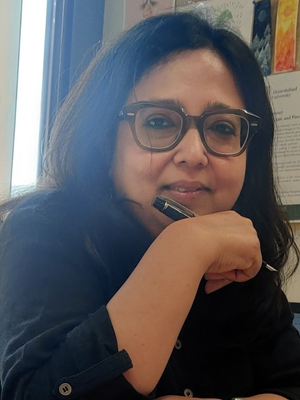
Manomohini Dutta
Assistant Professor
School of Arts and Sciences
Speaker
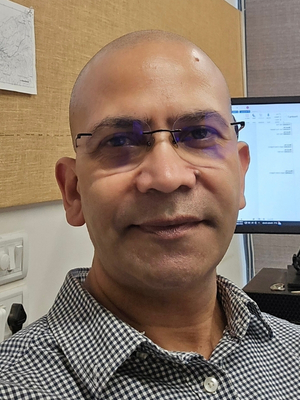
Murari Jha
Assistant Professor
School of Arts and Sciences
Speaker
Cars and Planes for Empire and Nation: World War II and Walchand Hirachand’s Industrial Ventures in India
This paper analyses the history of automobile and aircraft manufacture in late-colonial India as an instance of businesses strategically positioning themselves as being in the ‘public interest’ (which they defined in a variety of ways for different audiences). In doing so, it goes beyond historiographical debates on the policies of the colonial state vis-à-vis indigenous industry, placing the emphasis on the agency of entrepreneurs in a rapidly changing polity.
This talk was originally presented at the Annual Meeting of the Business History Conference in Providence, USA, on 16 March 2024. Funds for conference travel were provided by the Office of the Dean, Graduate School and Research, Ahmedabad University.
Property and the Person: A Study of Property Exempt from Partition in the Dāyabhāga
This paper is about impartible property in an influential inheritance treatise from medieval Bengal—the Dāyabhāga—situated within the textual genre of Dharmaśāstras. Prior scholarship has noticed impartible property in a family but has paid little attention to what makes such property unique. This study answers why such property, for instance vidyādhana, cannot be passed on to regular heirs during the inheritance and partition process.
This talk was originally presented at the 236th Annual Meeting of the American Society for Premodern Asia, Los Angeles, California, on 25 April 2026. Funds for conference travel were provided by the Office of The Graduate School and Research, Ahmedabad University.
Loss of the Ganga, losing the empire: Explaining Mughal decline from the riparian perspective
Focusing on the Ganga River and rainfall pattern, this talk offers a novel perspective on the decline of the Mughal Empire. So far, historians have explained the decline by looking at endogenous factors. This presentation takes a different approach, considering exogenous forces such as shifting patterns of mobility and long-distance trade routes, the Indian Ocean-centred global economy and environmental changes to explain the eighteenth-century political transformation.
This presentation was first delivered at the 52nd Annual Conference on South Asia, held at the University of Wisconsin–Madison, on 31 October 2024. The University Research Board at Ahmedabad University provided funds for the conference and travel.
Speaker
Aparajith Ramnath
Aparajith Ramnath is a historian of science, technology, and business. He is an Associate Professor in the Humanities and Languages division, School of Arts and Sciences, Ahmedabad University.
Speaker
Manomohini Dutta
Manomohini Dutta is a historian at the School of Arts and Sciences. Her research interests include pre-modern Indian history, law and religion, Dharmaśāstras, and gender.
Speaker
Murari Jha
Murari Jha is a historian of early modern India. His research focuses on explaining how external, global shifts and transformations impacted changes in the early modern Indian polity and economy.