Friday
12
September 2025
1:00 - 2:30 PM IST
Location
Room 209, School of Arts and Sciences
Central Campus
Share
Arts and Sciences Research Seminar Series
Arts and Sciences Research Seminar Series
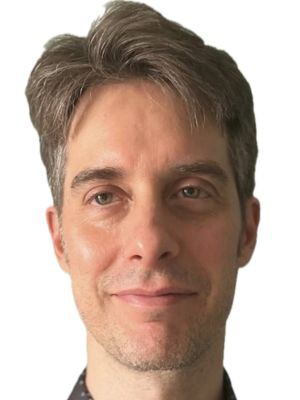
Samuel Wright
Associate Professor
Humanities and Social Sciences
Plaksha University
Speaker
Any history of time in India must contend with the fact that multiple units for measuring time were used. In the period under consideration here, three time units predominated: the ghari, the prahar, and the hour. As units of measure, these can easily be made commensurate. But it is when we consider the history of their use that complexities arise. Not only is each unit associated with a different technological device—the ghari with the inflow water clock, the prahar with the gong, and the hour with the mechanical clock—but the ghari and prahar appear now to be merely historical units of time measurement unlike the hour. Nevertheless, the history of the use of these time units opens up an enormous historical question: How did the hour displace the ghari and prahar to become the time unit of India? In this talk, I attempt to provide an answer to this question. I discuss sources from Mughal, regional, and colonial archives and address the temporal context in which this 'time change' occurred.
Speaker
Samuel Wright
Samuel Wright is an intellectual historian of South Asia. He teaches and writes about time and temporality, political culture, environmental humanities, nyaya philosophy, and philosophy of technology. He is Associate Professor of Humanities and Social Sciences at Plaksha University and is the author of A Time of Novelty: logic, emotion, and intellectual life in early modern India, 1500-1700 CE (Oxford University Press).