23 April 2026
The Climate Institute Joins IUINDRR-NIDM Network to Secure a Climate-resilient Future for India
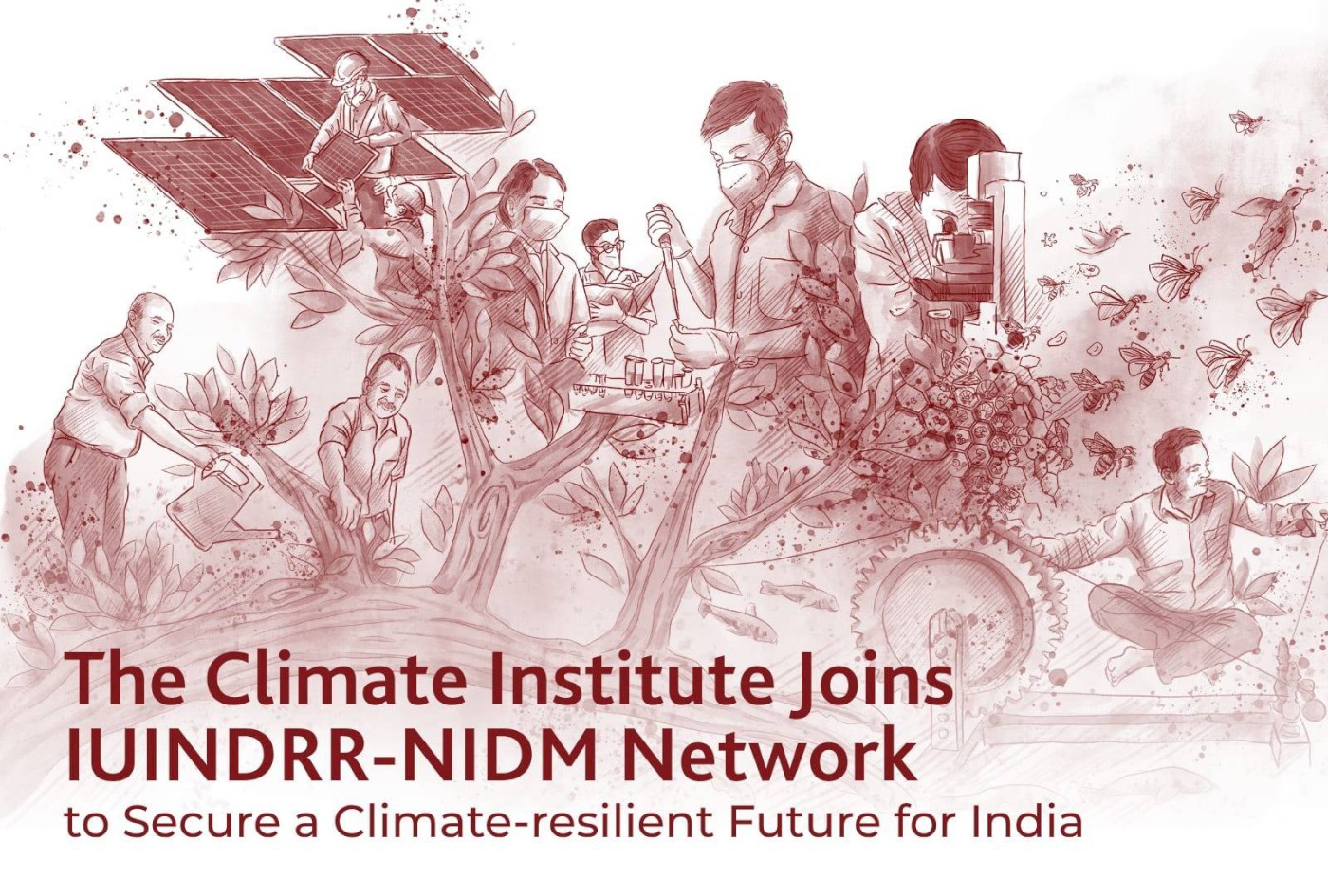
Rising temperatures, erratic monsoons, intensified cyclones, and increased vulnerability in Himalayan regions attest to the strong linkages between disasters and climate change. These events result in widespread economic losses, displacement, and growing threats to food and water security.
The Climate Risk Index 2026, ranked India among the ten most climate-disaster-affected countries. India recorded around 430 extreme weather incidents in the past 30 years, causing losses of approximately $170 billion. As these events become more frequent and intense, there is an urgent need to advance interdisciplinary research, evidence-based policy frameworks, and education-driven, problem-solving approaches that inform climate-resilient solutions.
In this context, The Climate Institute, anchored at Ahmedabad University, announced its induction as a member of the IUINDRR-NIDM network. The National Institute of Disaster Management (NIDM) is a central institute constituted under the Disaster Management Act, 2005, with a mandate focused on capacity building, training, research, and policy support in the field of disaster management.
In alignment with Agenda 6 of the Prime Minister’s 10-Point Agenda, NIDM initiated the India Universities and Institutions Network for Disaster Risk Reduction (IUINDRR-NIDM) to build partnerships with universities and institutions. This network aims to shift future narratives on disaster risk reduction through education, research, dialogue, debate, and policy advocacy.
Through this collaboration, The Climate Institute will contribute its academic knowledge and expertise to address diverse disaster-related challenges. The association will focus on capacity building, research, training and educational programmes, resource generation, knowledge management, awareness creation, community outreach, and the organisation of seminars, symposia, and conferences.
Through this association, The Climate Institute seeks to strengthen the interface between research, education, and practice in disaster risk reduction. The endeavour aims to contribute meaningfully to evolving understandings of climate risk and resilience, taking steps that move India closer to a more climate-resilient future.