
Stepwell Centre for Asian Futures Policy Paper
From Ambiguity to Connectivity
Policy Recommendations for Effective Implementation of the BBIN Motor Vehicles Agreement

Esha Tomar
Fellow
Stepwell Centre for Asian Futures
Ahmedabad University
Published on: October 21, 2026
Summary
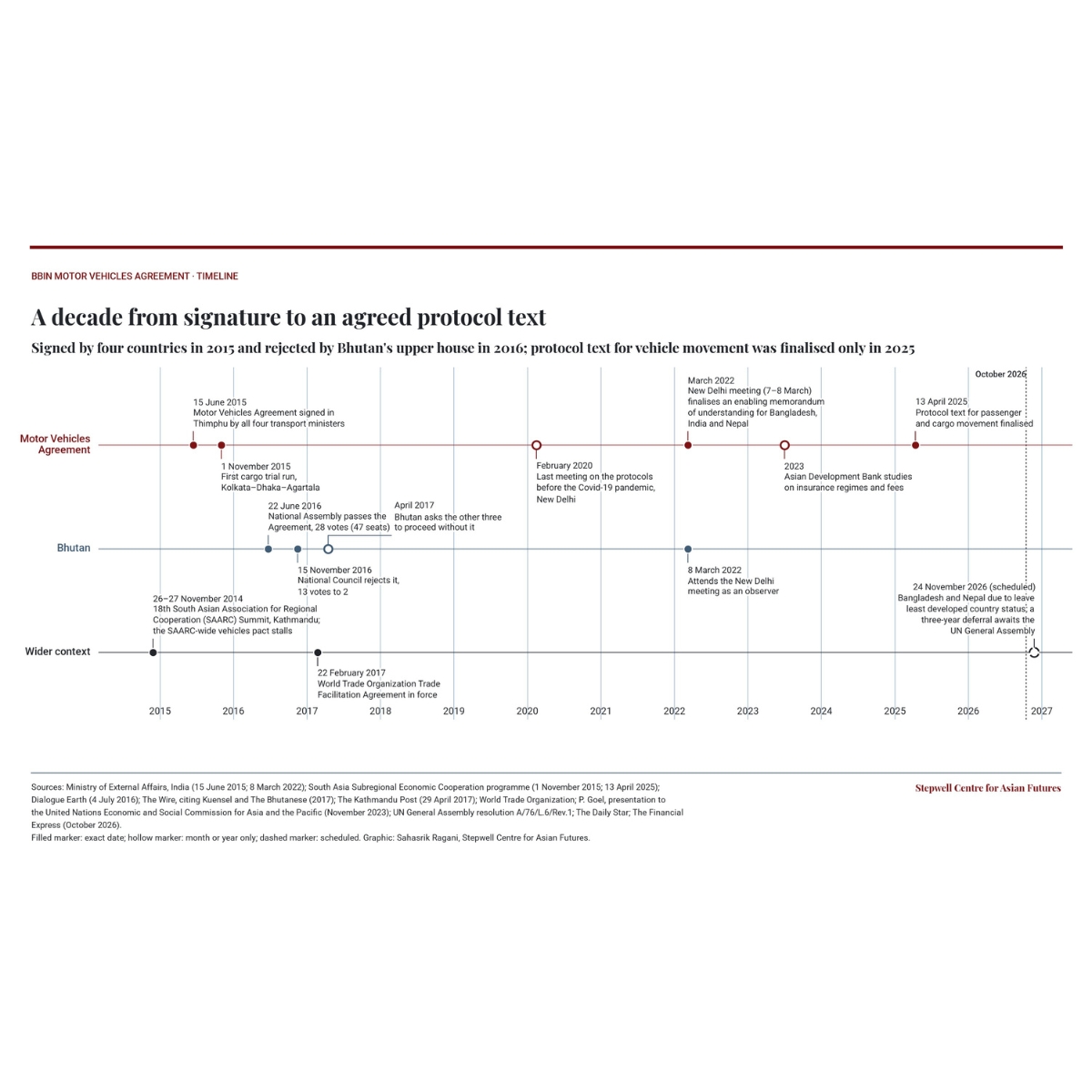
The Bangladesh-Bhutan-India-Nepal Motor Vehicles Agreement (BBIN MVA), signed in 2015, was intended to facilitate seamless cross-border movement of passenger and cargo vehicles and to enhance regional trade and connectivity. However, despite its potential, the Agreement remains largely under-implemented and, in practice, functions as a trilateral (Bangladesh-India-Nepal) arrangement following Bhutan’s withdrawal in 2017, although Bhutan retains the option to rejoin BBIN in future.
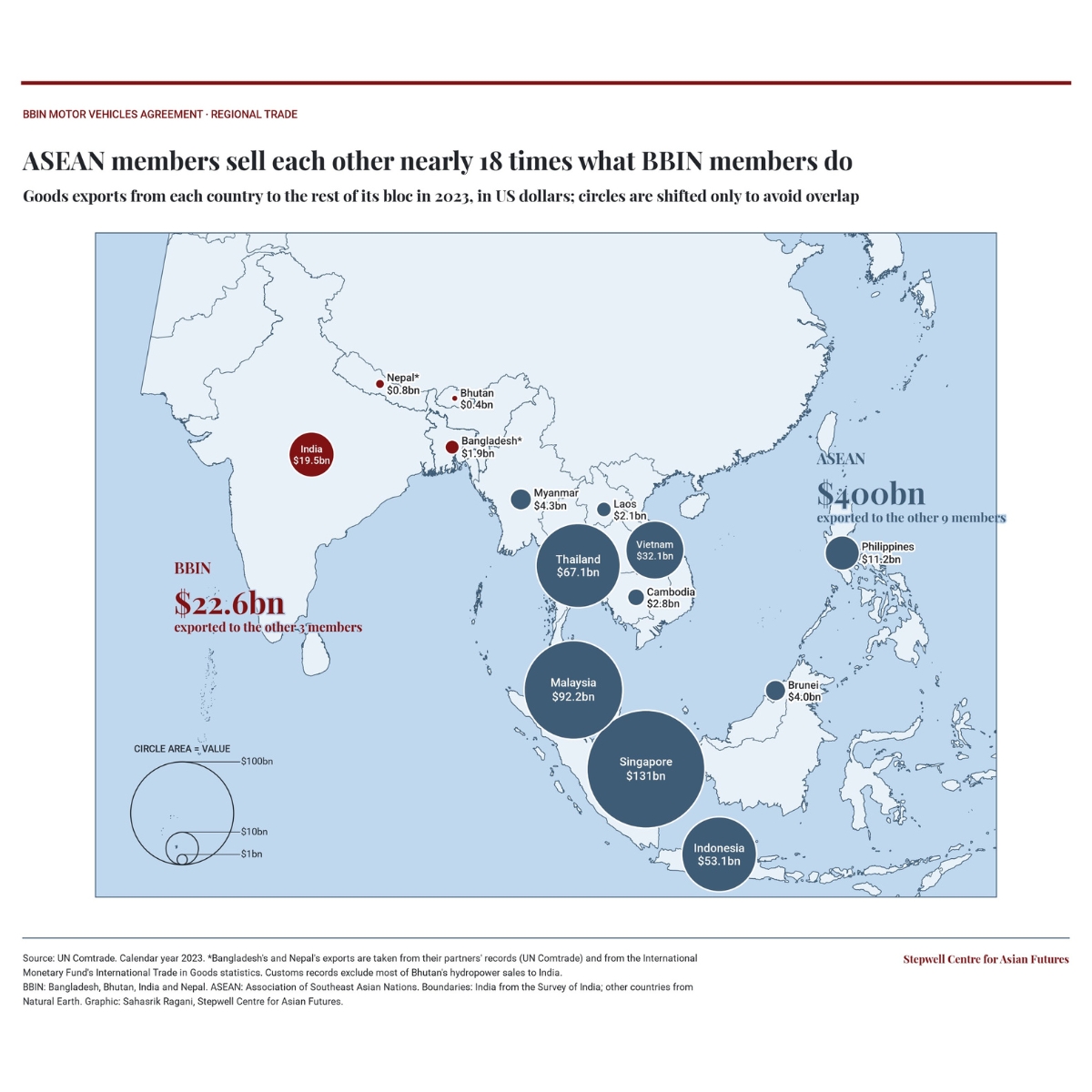
This limited implementation reflects broader inefficiencies in South Asian regional trade, where intra-regional trade among the countries of the South Asian Association for Regional Cooperation, or SAARC accounts for only around 5 per cent of total trade[1]—significantly lower than comparable regions such as Southeast Asia, where a sizable 22-23 per cent of the total foreign trade is intra-ASEAN[2], among countries of the Association of Southeast Asian Nations.
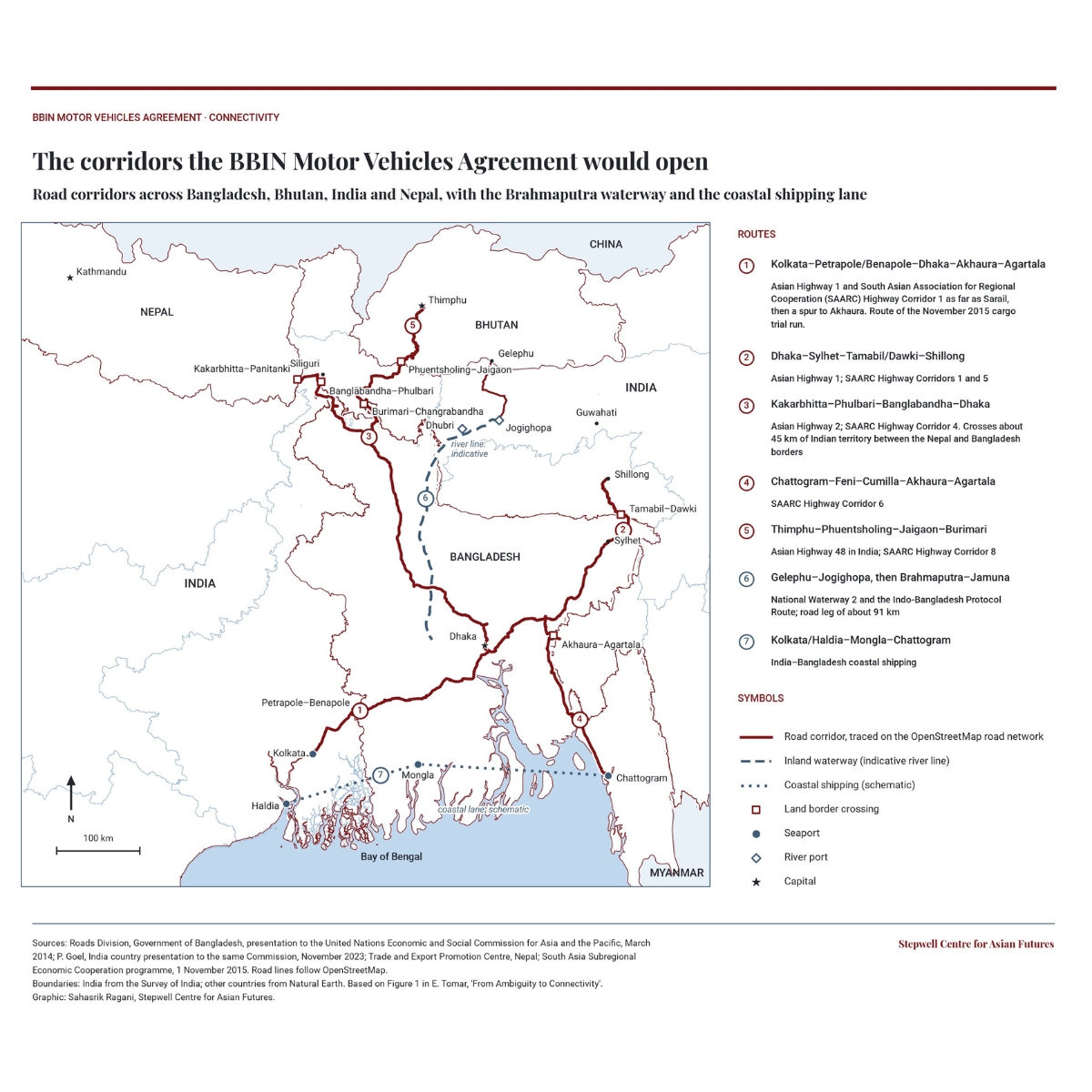
While geographical and infrastructural constraints persist, this paper argues that the principal barriers to the BBIN MVA’s implementation are “soft” in nature—namely legal ambiguity, regulatory divergence, and a trust deficit among state parties. First, the Agreement itself is drafted as a skeletal framework, leaving critical operational details—such as customs procedures, insurance liability, and dispute resolution—to unspecified “competent authorities.” This excessive delegation creates uncertainty, enables discretionary enforcement, and undermines predictability in cross-border movement.
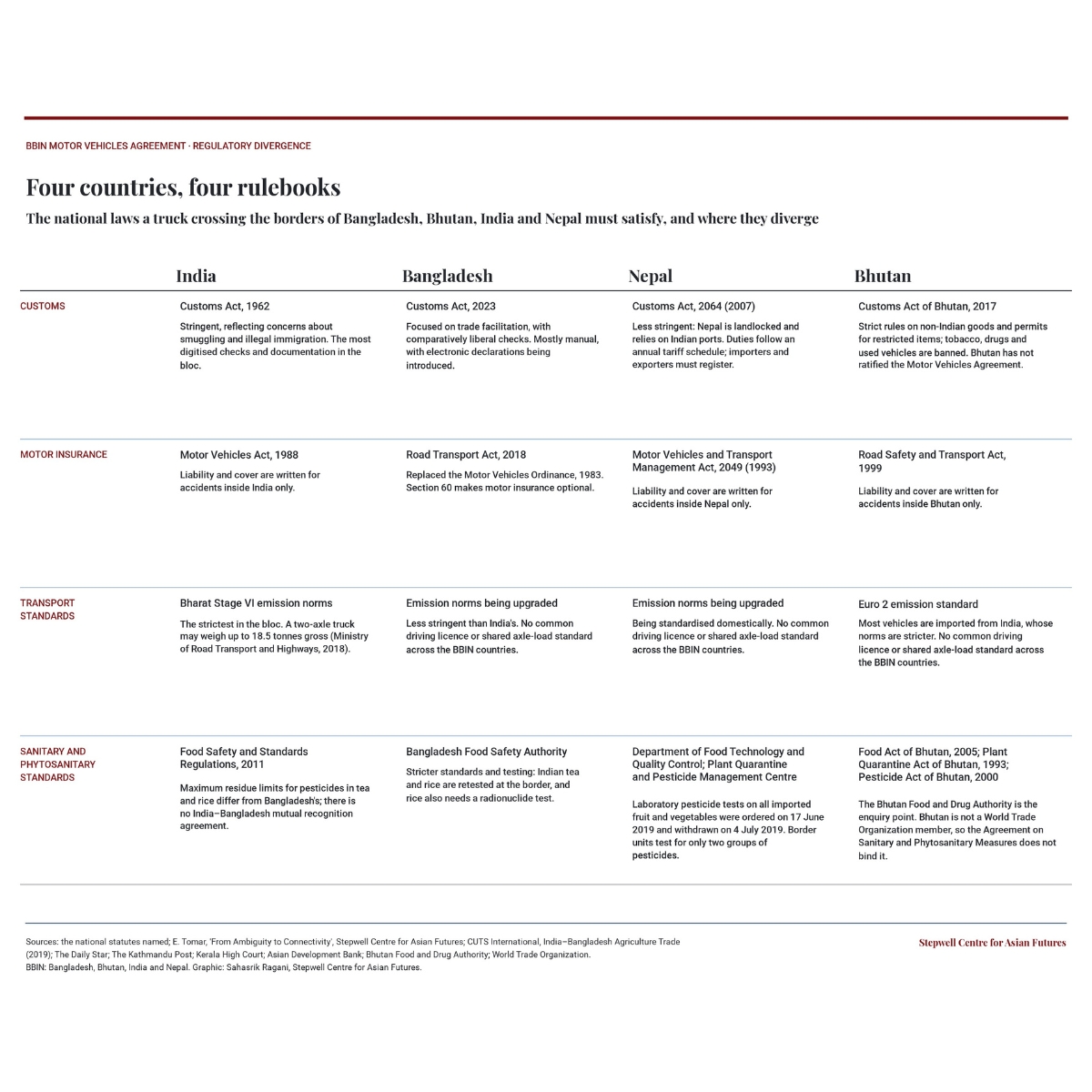
Second, there exists significant legal and regulatory disharmony among the member states. Divergent customs regimes, varying degrees of procedural digitisation, incompatible insurance frameworks, and differing transport and sanitary standards result in repeated inspections, compliance delays, and increased transaction costs. These inefficiencies negate the core objective of seamless connectivity and render regional trade less competitive than extra-regional alternatives.
Third, these structural challenges are compounded by political constraints, including protectionist concerns, asymmetrical economic relationships, and fluctuating bilateral relations—particularly between India and Bangladesh, and India and Nepal. Bhutan’s withdrawal further underscores the role of domestic economic and environmental considerations in shaping participation. In such a context, the Agreement’s reliance on sustained intergovernmental coordination becomes a critical vulnerability.
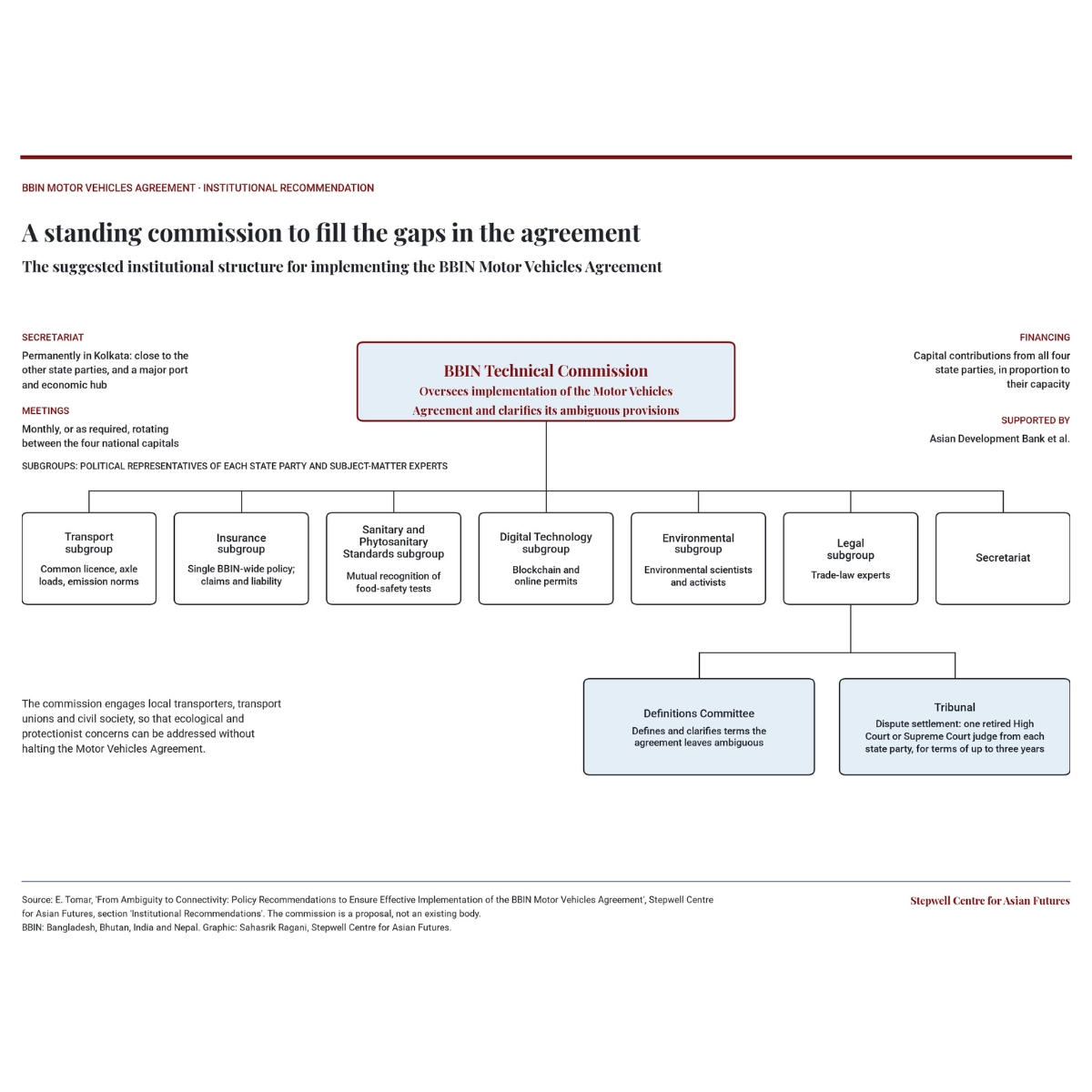
To address these challenges, the paper proposes a phased, technocratic approach focused on targeted institutional and regulatory reforms rather than broad political integration. Key recommendations include:
- Establishment of a Technical Commission comprising national and joint subgroups on customs, transport, insurance, and SPS (sanitary and phytosanitary) standards.
- Creation of a formal dispute resolution body; and the adoption of existing international frameworks such as the WTO Trade Facilitation Agreement (TFA) and SPS Agreement to harmonise procedures and reduce costs of trade and of production.
- Development of common operational standards such as a common/pan-BBIN permits system, mutually recognised driving license, and
- Region-wide insurance coverage.
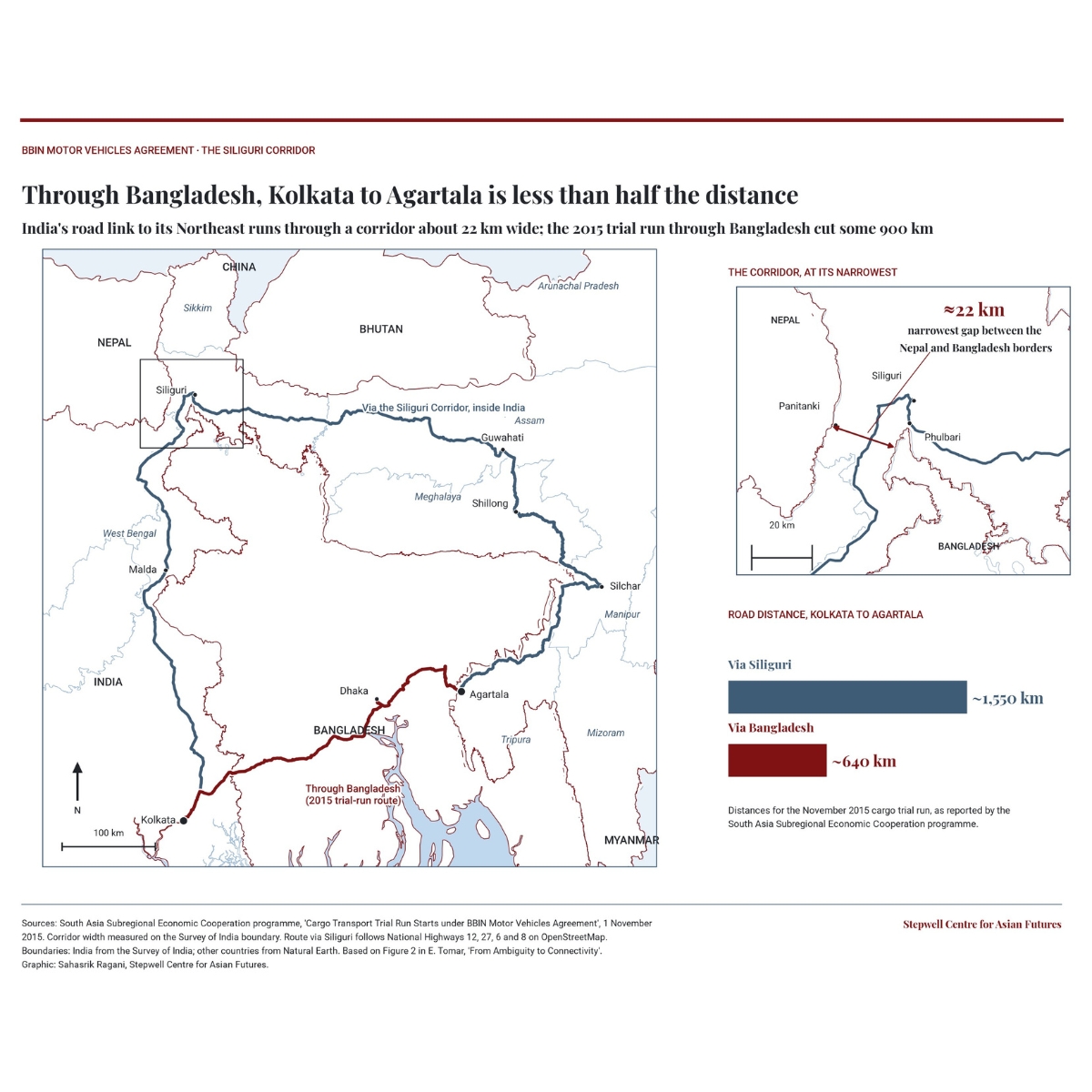
As the largest economy and most centrally positioned country in the region, India is uniquely placed to facilitate these efforts. Effective implementation of the BBIN MVA could significantly reduce trade costs, improve connectivity—particularly for India’s Northeastern states—and enhance sub-regional economic activity. More broadly, it offers a pragmatic pathway for subregional cooperation in a region where wider multilateral frameworks have struggled.
Ultimately, the BBIN MVA’s success depends not on the ambition of its objectives, but on the effectiveness of its implementation. With sustained political will and focused institutional reform, the Agreement has the potential to transform regional trade and connectivity in South Asia.
© Stepwell Centre for Asian Futures, Ahmedabad University.
[This Policy Paper can be used for dissemination and research, with attribution.]