25 September 2026
DNA Nanostructures Might Offer a Groundbreaking Approach to Restoring Brain Function
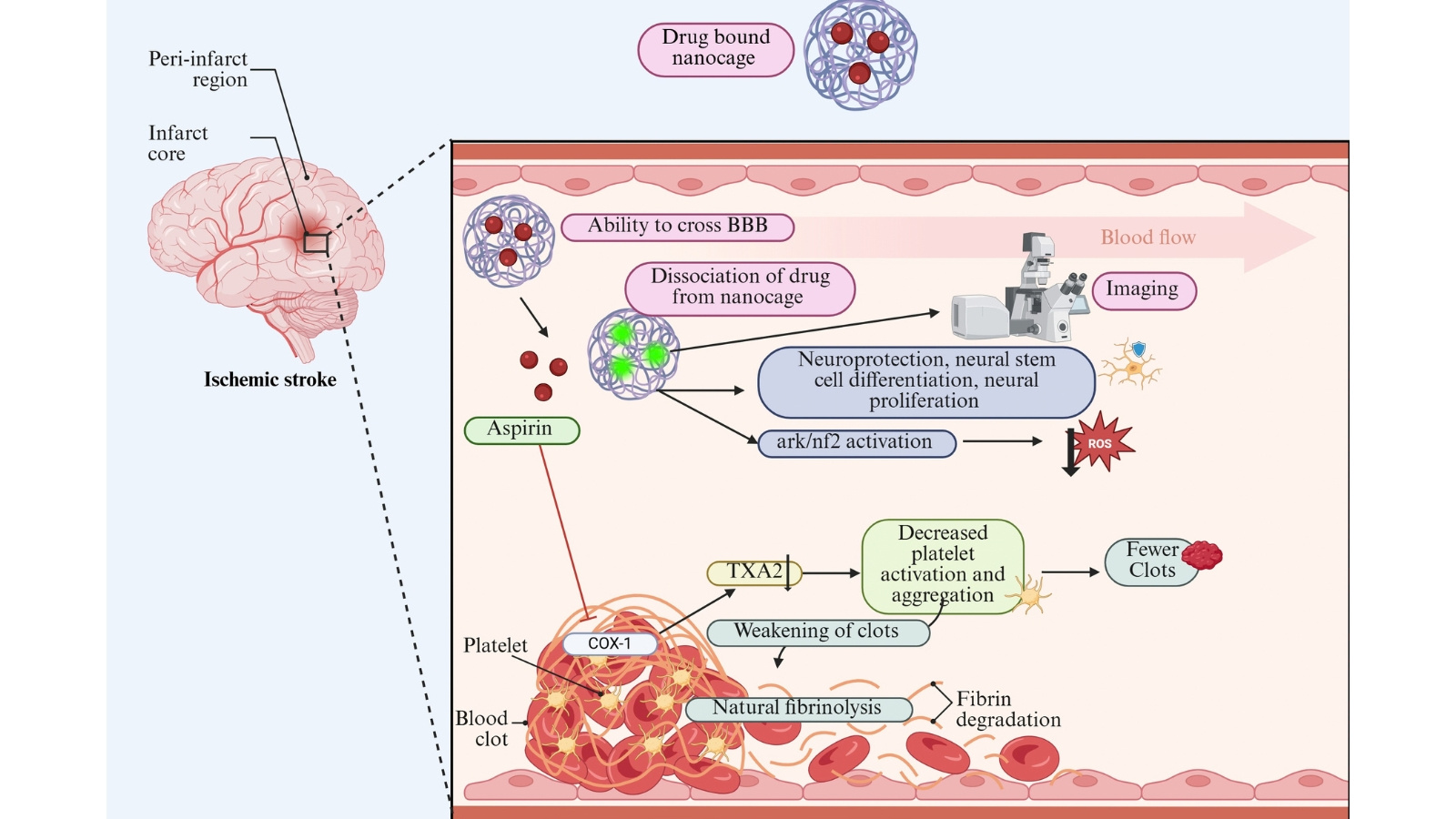
A stroke can cause brain damage within minutes. Current treatments can help restore blood flow and limit further damage, but helping the brain recover remains difficult. Consequently, scientists are investigating whether DNA, the fundamental blueprint of life, might offer a groundbreaking approach to restoring brain function. DNA nanotechnology presents an intriguing approach, asking, "What if we could custom-build delivery systems at the molecular scale?"
Researchers, including alumni Krupa Kansara, Keya Jantrania and Shaivee Chokshi, along with Professor Ashutosh Kumar from the School of Arts and Sciences, led a review on DNA nanostructures, custom-designed tiny DNA structures. The review examined how these structures can transport therapeutic agents, target specific cellular locations, and dynamically adapt to internal physiological conditions.
One promising example is the tetrahedral DNA nanostructure, a tiny pyramid-shaped structure. Studies have found that these structures can reach the brain, reduce inflammation and oxidative stress, and protect nerve cells from dying after a stroke. In one rat study, treatment reduced the volume of brain damage from about 34 per cent to 2.7 per cent of the brain.
DNA nanostructures could also help doctors understand what is happening after a stroke. DNA-based sensors can detect tiny biological signals linked to stroke. Further DNA structures can carry imaging agents, enabling tracking of their activity in the brain.
Although these methods remain experimental and not yet available for clinical care, researchers must address key challenges related to their safety, stability, scalability, and overall performance in human biological systems before they can be broadly applied. The broader promise is a shift from simply treating the immediate effects of stroke towards developing targeted approaches.
Conducted in collaboration with Professor Dhiraj Bhatia of IIT Gandhinagar, the study, “Prospects of DNA nanotechnology in stroke repair and regeneration,” was published in Communications Biology, a journal from the Nature Portfolio.