Wednesday
03
September 2025
4:00 - 5:30 PM IST
Location
Room 113, School of Arts and Sciences
Central Campus
Share
Violence, Nonviolence, and the Poetics of Space: Robben Island and the Transformation of Humankind
Arts and Sciences Lecture Series
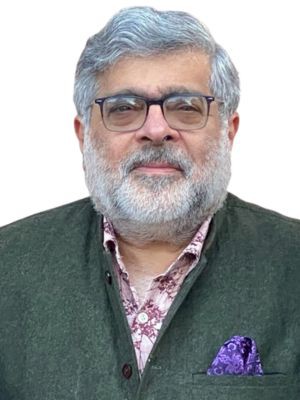
Vinay Lal
Cultural Critic, Writer, Blogger
Professor of History, University of California
Speaker
The present talk is derived from a four-book project called "The Genocide and Hope Quartet: Studies in the Architecture of Oppression and the Redemptive Possibilities of Nonviolence." Each of the four books -- Dandi, Auschwitz, Hiroshima, and Robben Island -- is named after a place of critical importance in the global history of nonviolence and violence in the 20th century, and yet what is signified by each of these places transcends the meaning we attach to each name. In this talk, I shall focus on Robben Island, which earned a reputation as "the world's most notorious penitentiary." Some 2000 of South Africa’s leading political prisoners from the African National Congress and the Pan Africanist Congress, most famously Nelson Mandela, were interned there--sometimes for as long as 20 years. Before Robben Island closed shortly after the end of apartheid, and became a UNESCO World Heritage Site, it had been transformed into "Robben Island University." What happened at Robben Island and how did the story of genocide get transformed into a story of hope?
Speaker
Vinay Lal
Vinay Lal is a cultural critic, writer, and Professor of History at the University of California, Los Angeles (UCLA). He earned his BA and MA from Johns Hopkins in literature, philosophy, and history in 1982, and a PhD with Distinction from the University of Chicago (1992) in South Asian studies. He is the author or editor of 22 books including nine volumes from Oxford UP. He blogs at vinaylal.wordpress.com, has an academic YouTube channel, and is a member of the Board of Delegates of Oxford University Press. He was a Fellow for 2024 at the Stellenbosch Institute of Advanced Study, South Africa, and is presently the holder of the Fulbright-Nehru Professional and Academic Excellence Fellowship.