Wednesday
03
December 2025
11:00 AM - 12:30 PM IST
Location
Room 208, School of Arts and Sciences
Central Campus
Share
Vascular Bone Grafts: A Synergic Approach to Regeneration
Arts and Sciences Research Seminar Series
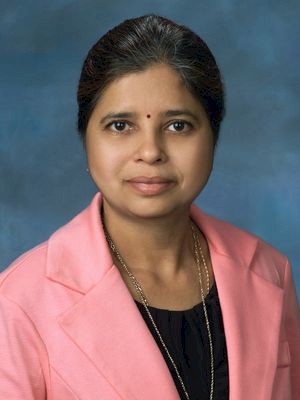
Umadevi Kandalam
Associate Professor
Physiology
Woody Hunt School of Dental Medicine
Texas Tech University Health Sciences Center
El Paso, USA
Speaker
Craniofacial bone regeneration is often limited by insufficient vascularization and poor integration, which compromise bone healing and increase the risk of complications. Successful bone regeneration requires both osteogenesis (bone formation) and angiogenesis (vessel formation). Gingiva-derived mesenchymal stem cells (GMSCs) offer a promising autologous stem cell source for regenerative therapies due to their ease of isolation, high proliferative capacity, and immunocompatibility. Our goal is to develop a vascularized bone graft for the repair of craniofacial defects. This study examined whether predifferentiation of GMSCs towards endothelial or osteogenic lineages enhances osteogenesis.
Methodology: Cryopreserved human GMSCs were expanded and characterized. Osteogenic differentiation of GMSCs was initiated by induction with osteogenic supplements, and angiogenic differentiation was initiated by induction with angiogenic medium (50 ng/ml VEGF). They were incubated for 7 days. After pre-differentiation, angiogenic and osteogenic GMSCs were co-cultured for an additional seven days and compared with their respective control groups. Osteogenic differentiation was evaluated by quantitative RT-PCR to assess osteocalcin mRNA expression. A tube formation assay was performed to assess the angiogenic potential of GMSCs in co-culture. To assess the efficacy of the cell-scaffold system, a calvarial defect with a 4.5mm diameter was surgically created in an athymic rat model. GMSCs were pre-differentiated into endothelial and osteogenic cells and implanted in a calvarial bone defect. Bone regeneration was evaluated using microcomputed tomography (μCT) and histology. Statistical analysis was performed using one-way ANOVA with Dunnett’s post hoc test (p < 0.05).
Results: Co-cultures significantly upregulated osteocalcin mRNA expression compared with the other groups (p < 0.05). The tube formation assay confirmed the angiogenic functionality of VEGF-induced GMSCs. Overall, these results suggest that combining angiogenic and osteogenic progenitors derived from a single GMSC source enhances osteogenic differentiation while maintaining its angiogenic potential. Furthermore, our microCT and histological studies showed that the synergistic interaction between osteogenic and angiogenic cells enhanced bone regeneration in calvarial defects.
Conclusion: These findings strongly suggest that transplanting a dual-progenitor cell is a novel approach for achieving enhanced and vascularized bone tissue regeneration in clinical applications for critical-sized bone defects.
Speaker
Umadevi Kandalam
Umadevi Kandalam is an Associate Professor in Physiology at the Woody Hunt School of Dental Medicine and faculty in the Department of Biomedical Sciences, Texas Tech University Health Sciences Center at El Paso.
Professor Kandalam’s area of research is in the field of regenerative medicine. Her primary focus is on bone regenerative therapies for repairing cleft palate defects and regenerating bone in the craniofacial region. Professor Kandalam received several local and external grants. He has published over 35 research articles and presented at more than 70 conferences, including several national and international events. She serves as a member of the American Physiological Society and the International Association of Dental Research.
Professor Kandalam is a committed wellbeing practitioner. She is passionate about integrating evidence-based wellbeing practices into professional environments to foster healthier, more resilient, and high-performing teams. She firmly believes that sustainable success begins with individual and collective well-being. She actively shares this knowledge with wider communities.