Wednesday
08
April 2026
2:30 - 3:30 PM IST
Location
Room 300, School of Arts and Sciences
Central Campus
Share
Understanding Air Quality: Combining Technology, Physics, and Machine Learning
Arts and Sciences Research Seminar Series
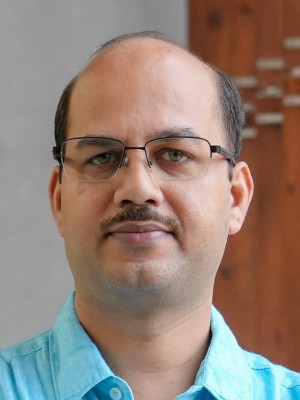
Aditya Vaishya
Associate Professor
Air Quality and Climate Change
Speaker
Air quality observations across dense monitoring networks are essential for identifying pollution sources, assessing impacts on public health and climate, and thereby informing mitigation strategies. Despite severe air pollution, particularly high fine particulate matter (PM2.5) concentrations, continuous and systematic measurements remain sparse in India. High-end instruments are often deployed at fewer stations due to high costs, and various models and satellite-derived estimates lack rigorous validation over Indian region. To address this gap, the Air and Climate Research Laboratory at Ahmedabad University developed low-cost air quality measurement devices, calibrated them, and validated their measurements. We are now establishing a network of these devices across India, and have already over 10 operational stations. The network data is being used to comprehensively evaluate global reanalysis and satellite-based estimates. Furthermore, sensor-based measurements were used to train machine learning models for regional air quality predictions. In the talk, I will discuss the main results from these activities, and highlight the potential of combining low-cost sensors with machine learning to enhance air quality modeling in India.
Part of this work was presented at the Asia Oceania Geosciences Conference (AOGS) 2025 and was funded by the Ahmedabad University International Travel Grant.
Speaker
Aditya Vaishya
Professor Aditya Vaishya is an Associate Professor at Ahmedabad University and leads the Air, Water, and Health vertical of the Climate Institute. His research focuses on understanding regional air quality using measurements, modelling, and machine learning. He obtained PhD in 2012 from the National University of Ireland Galway.