Wednesday
26
August 2026
4:00 - 5:30 PM
Location
Room 113, School of Arts and Sciences
Central Campus
Share
Tibet in Chinese Foreign Policy and the Implication for India
Arts and Sciences Lecture Series
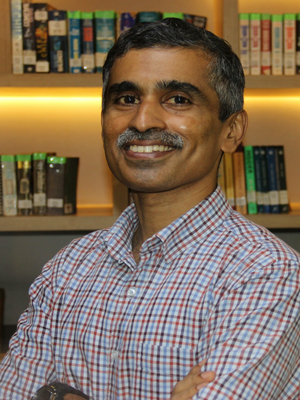
Jabin T. Jacob
Associate Professor
Department of International Relations and Governance Studies
Director, Centre of Excellence for Himalayan Studies
Shiv Nadar University, Delhi
Speaker
Tibet’s place in the Indian imagination today exemplifies both the cultural proximity of the past as well as a strategic calculus brought about by tensions in the India-China relationship for nearly 70 years. However, neither quite takes into account the evolution of Tibet’s place in the Chinese imagination and polity itself. In accessing Tibet largely through Western lenses in the past century and more—even the Dalai Lama’s presence in India has been viewed by and large through a Western-constructed identity as the leader of an oppressed ethnic group—India has both forgotten its own organic connections to Tibet and legacy of travel and analysis of that region as well as ignored the possibilities of rethinking its relationship with Tibet. This rethinking needs to be done keeping in mind the current modern geopolitical environment certainly but also India’s own changed national circumstances—including its relationship with modern Buddhism and its geographic peripheries. What the Chinese have done in Tibet under their control have both cautionary and salutary lessons for India.
Speaker
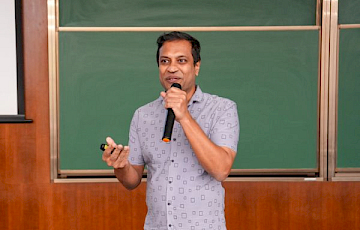
Jabin T. Jacob
Jabin T. Jacob is Senior Visiting Fellow at Stepwell Centre for Asian Futures, Ahmedabad University; Associate Professor, Department of International Relations and Governance Studies, and Director, Centre of Excellence for Himalayan Studies, Shiv Nadar University, Delhi NCR. He was formerly Fellow and Assistant Director at the Institute of Chinese Studies. His research interests include Chinese domestic politics, Sino-Indian border areas, Indian and Chinese worldviews, and centre-province relations in China. Jacob’s latest publications include two co-edited special issues for the China Report on the Communist Party of China’s 100th anniversary (February 2022 and August 2022); two volumes on How China Engages South Asia titled respectively, Themes, Partners and Tools (2023); and In the Open and Behind the Scenes (2025) for the Centre for Social and Economic Progress, New Delhi. Some of his work can be found at https://indiandchina.com/