Wednesday
26
November 2025
5:00 - 6:30 PM IST
Location
Room 300, School of Arts and Sciences
Central Campus
Share
The Synergy we create vis-à-vis The Profit we Share- How Game Theory helps!
Arts and Sciences Research Seminar Series
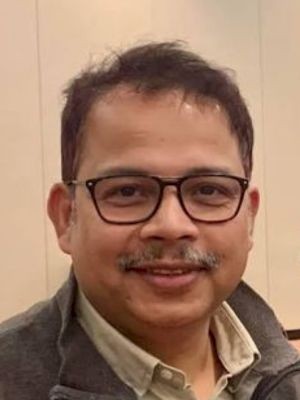
Surajit Borkotokey
Dibrugarh University
SpeakerIn this talk, I will start with some basic ideas on cooperative games, followed by a couple of motivating examples. Cooperative Game Theory describes social, economic, and other interactions, where agents make binding agreements to create synergy and generate resources. Solutions provide insights on how agents contribute to the resource generation process and, therefore, how they should be rewarded for their contributions. Then, I will describe two very important and interesting solution concepts, viz., the core solution and the Shapley value, with their respective characterisations. This will be followed by some applications of cooperative games in networks, social choice theory. As an example, in particular, I will discuss how cooperative game theory is being applied in practical problems such as content monetisation in social media. I will conclude with some further extensions and possible avenues to address more general, vis-à-vis more dynamic interactions among the players.
Speaker
Surajit Borkotokey
Surajit Borkotokey teaches Mathematics at Dibrugarh University, Assam, and is currently affiliated with Corvinus Institute for Advanced Studies (CIAS), Corvinus University of Budapest, Hungary, as a visiting Senior Research Fellow. His areas of interest include Cooperative Game Theory, Networks, and Aggregation under Uncertainty. He did his PhD from Dibrugarh University. His publications have appeared in prestigious journals like European Journal of Operational Research, Annals of Operations Research, Scientific Reports - Nature, Public Choice, Information Sciences, IEEE Transactions on Fuzzy Systems, etc.
An Indo-US Research Fellow, Prof Borkotokey did his postdoc at Louisiana State University, USA. He has completed two international collaborative projects with Queen's University, Belfast, UK, and has received international fellowships funded by IUSSTF, India-USA, NSP-SAIA, Slovakia, and Beijing Institute of Technology, Beijing, China, etc.