Wednesday
10
September 2025
4:00 - 5:30 PM IST
Location
Room 204, School of Arts and Sciences
Central Campus
Share
Microtubules and Cancer: From Cellular Highways to Therapeutic Targets
Arts and Sciences Lecture Series
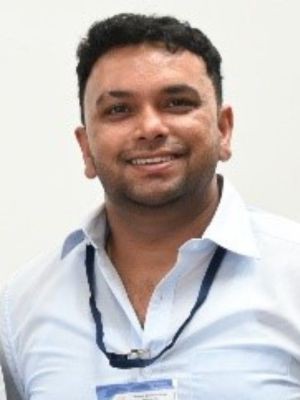
Ankit Rai
Assistant Professor
Gujarat Biotechnology University
Speaker
Inside every cell in our body, there are tiny tube-like structures called microtubules. These microscopic filaments act like roads and scaffolding, helping cells divide, transport materials, and maintain their shape. In cancer, these microtubules often behave abnormally, allowing cancer cells to grow and spread quickly. For many years, cancer treatments have targeted microtubules to stop this uncontrolled growth. Drugs like paclitaxel and vinblastine work by disrupting microtubule functions. However, cancer cells can develop resistance, making these treatments less effective over time.
In this talk, Ankit Rai, a scientist at Gujarat Biotechnology University, will explain how his research is uncovering new ways to understand and target microtubules in cancer. Using powerful microscopes and advanced tools that can track single molecules, his lab is able to watch how cancer drugs interact with microtubules in real time. Professor Rai will also share how problems in microtubule behaviour are not just linked to cancer, but also to brain diseases like Alzheimer’s and Parkinson’s. His team is working on developing better drugs that can precisely target these tiny structures, with fewer side effects. Whether you’re from a science background or simply curious about how modern medicine works, this talk will give you a glimpse into how something as small as a microtubule can have such a big impact on human health—and how researchers are finding smarter ways to fight back.
Speaker
Ankit Rai
Ankit Rai is a Ramalingaswami Fellow and Assistant Professor in Medical Biotechnology at Gujarat Biotechnology University (GBU), Gandhinagar. With over 15 years of research experience in cancer biology and cytoskeletal dynamics, his work primarily focuses on the intricate roles of microtubules in cancer progression, autophagy, and therapeutic resistance. He completed his PhD in Biotechnology from the Indian Institute of Technology (IIT) Bombay under Professor Dulal Panda, where he investigated the mechanisms of action of tubulin-targeting anticancer agents. He further advanced his expertise during a postdoctoral tenure at Utrecht University, The Netherlands, in the lab of Professor Anna Akhmanova—an international leader in cytoskeleton research—where he employed cutting-edge imaging and single-molecule techniques to study microtubule-targeting drugs.
At GBU, Professor Rai is leading a research program that integrates advanced microscopy, in vitro reconstitution systems, and high-throughput drug screening to unravel the molecular mechanisms regulating microtubule dynamics and autophagy interpaly in cancer and neurodegenerative diseases. His pioneering research is published in top-tier journals such as Nature Materials, PNAS, Molecular Cell, and Angewandte Chemie. With an h-index of 21 and over 1300 citations, Professor Rai has been widely recognized for his contributions to microtubule biology and drug discovery. He is also an active mentor, educator, and collaborator in translational research addressing cancer and neurological disorders.