Friday
10
April 2026
11:00 AM - 12:30 PM IST
Location
Room 331, School of Arts and Sciences
Central Campus
Share
Mahasweta Devi's Bortika, or How the Subaltern Was Published
Arts and Sciences Research Seminar Series
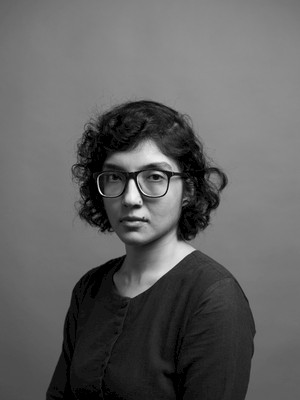
Sohini Chattopadhyay
Associate Professor
Writing Centre
CEPT University
Speaker
In Subaltern Studies Vol V, Gayatri Chakravorty Spivak argues that the difference between the historian shaping a discourse around a subaltern figure (such as a peasant) from the historical record, and a fiction writer writing historical fiction around a similar subaltern figure based on research, is one of degree and not one of kind. There is an element of narrative building in the case of the historian, and one of historical research in the case of the fiction writer.
She submits as evidence for this the writing of Mahasweta Devi, specifically the writer’s short story Stanadyini (Translation: Breast Giver), as an instance of subaltern writing. A year before this, Spivak had published her still iconic essay Can the Subaltern Speak, where she submitted that the subaltern does speak but the intellectuals are not listening (or too busy speaking for the subaltern).
Based on my work in Mahasweta Devi’s personal papers and archive so far, I would submit that Mahasweta gave the subaltern a mic via the little magazine Bortika that she inherited from her father. I present select instances of some of the most interesting writers she published from my work on the Bortika archive in this talk.
As such, Mahasweta both influenced Spivak’s argument, and was likely shaped by it too.
Speaker
Sohini Chattopadhyay
Sohini Chattopadhyay is working on a biography of Mahasweta Devi. She is a National-Award film critic and writer. Her first book, The Day I Became a Runner, examines women’s citizenship in India through the lens of sport—specifically running. She works at the Writing Center at CEPT University.