Wednesday
13
August 2025
2:00 - 3:30 PM IST
Location
Room 408, School of Arts and Sciences
Central Campus
Share
Human-relevant Drug Discovery Pipeline Using Non-animal Models
Arts and Sciences Research Seminar Series
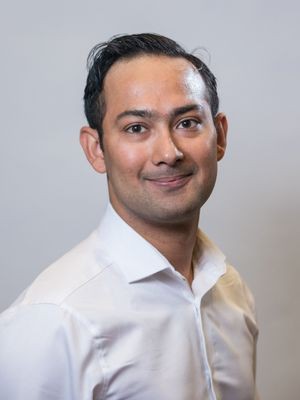
Ishan Goswami
Assistant Project Scientist
University of California Berkeley
Speaker
The adoption of non-animal models (NAMs) for drug and product safety assessment is rapidly gaining momentum among regulatory agencies and pharmaceutical companies worldwide. Integrating human pluripotent stem cell (hPSC) technology with microfluidic microphysiological systems (MPS) holds tremendous promise for replicating heterotypic tissue interactions critical to human physiology and disease; paving the way for innovative avenues in drug discovery. In this talk, I will share our work on developing hPSC-derived MPS platforms that model individual tissues, such as the heart, liver, and pancreatic islets, highlighting their application in drug toxicity screening and discovery, including the use of artificial intelligence to accelerate drug development and repurposing. I will then discuss our progress in engineering a multi-organ MPS model for type 2 diabetes mellitus (T2DM), integrating hPSC-derived adipocytes, hepatocytes, macrophages, and islet-β cells. This section will focus on strategies for common medium formulation, system scaling, and recapitulating key metabolic signatures at the onset of T2DM, such as hepatic insulin resistance triggered by adipocyte inflammation. Finally, I will introduce our efforts to create digital twins of pancreatic islets and address current challenges and emerging solutions in developing robust NAMs for translational research and drug discovery.
Speaker
Ishan Goswami
Ishan is a dedicated innovator in healthcare, specialising in the development of next-generation solutions at the intersection of biology and engineering. His current research integrates microfabrication, thermodynamics, fluid mechanics, and human stem cell technologies to create advanced microphysiological systems—human-relevant platforms that offer ethical and predictive alternatives to traditional pre-clinical animal models. Prior to his current research, Ishan bridged engineering and fundamental sciences to develop clinical applications for cancer therapy and arterial stenosis detection. He earned his PhD in Mechanical Engineering from Virginia Tech, followed by postdoctoral training at the University of California, Berkeley.