Wednesday
29
October 2025
2:30 - 4:00 PM IST
Location
Room 301, School of Arts and Sciences
Central Campus
Share
Heidegger on Human Cognition and AI Cognition
Arts and Sciences Research Seminar Series
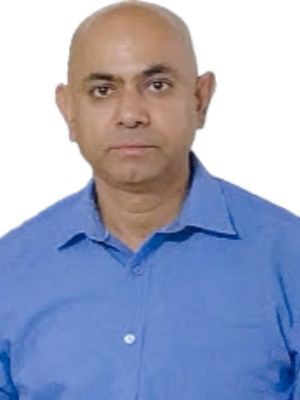
Navneet Chopra
Assistant Professor
Department of Philosophy
University of Delhi
Speaker
The talk explores the fundamental difference between human and machine cognition through a Heideggerian phenomenological lens. It critiques the computational models advanced by Newell, Simon, Putnam, and Fodor, who treat the mind as software. Heidegger’s phenomenology, and further Taylor’s background conditions, reveal that human sense-making arises not from detached symbol manipulation but from 'engaged' Dasein grounded in embodied, pragmatic, historical-cultural and intersubjective engagement. Drawing on the 4EA framework (embodied, embedded, enactive, extended, affective) and DST (dynamic system theory), we learn that cognition is an emergent phenomenon rather than a centralised 'essentialist' process, and arises from reciprocal interactions among brain, body, and environment, and expectations aligned with Merleau-Pontean "intentional arc" in human intentionality. Thus, solipsistic machine intelligence remains irrelevant for grasping the real human cognitive mechanism.
Speaker
Navneet Chopra
Professor Navneet Chopra is an Assistant Professor in the Department of Philosophy, University of Delhi. He holds dual Master’s degrees in Philosophy and Psychology, and earned his PhD in Philosophy (Problem of Other Mind and Its Relation with Language), which is a work at the intersection of phenomenology and cognitive science. His research and teaching interests encompass the philosophy of cognitive science, esp. embodied-enactive cognition, phenomenology, existentialism, philosophy of psychiatry, and philosophical counselling. Professor Chopra has published on a range of topics, including the relationship between language and thought, perception, phenomenology, comparative sex research, and the nature of philosophy. His various research papers have been accepted at international and national conferences in India (e.g. IIT Bombay, IIT Gandhinagar, IIT Guwahati) and abroad (e.g. TSC-2009, Hong Kong; TSC-2019, Switzerland; TSC-2023, Italy, Ruhr University, Germany). His current work focuses on developing a holistic Counselling Program that integrates insights from phenomenology, existentialism, embodied and dynamic cognitive science, Zen, and the Bhagavad Gita.