Wednesday
21
January 2026
2:45 - 3:45 PM IST
Location
Room 204, School of Arts and Sciences
Central Campus
Share
From Conserved Roles to Novel Cross-kingdom Communication: A Story of Hydra
Arts and Sciences Research Seminar Series
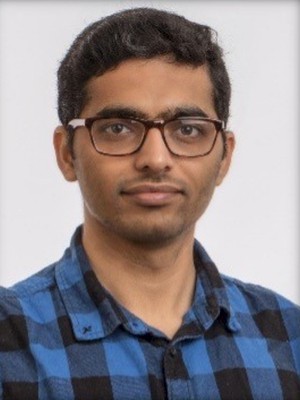
Jay Bhatia
Post Doctoral Fellow
Heinrich-Heine-University of Duesseldorf
Speaker
Host–microbiome interactions are increasingly recognised as one of the fundamental drivers of animal development and physiology. My research investigates the functional and compositional dynamics of host-associated microbiomes using Hydra as a powerful model system. I examine how abiotic environmental factors shape microbial community structure through field-based sampling and dissect mechanistic host–microbe interactions by experimentally simplifying the Hydra microbiome under laboratory conditions. This reductionist approach revealed that a bacterial quorum-sensing molecule strongly influence host pattern formation by modulating epithelial stem cell fate decisions. These effects are mediated by a novel Hydra protein that integrates into the highly conserved Wnt signalling pathway. Additionally, by leveraging Hydra as a basal metazoan, I explore the evolutionary origins of conserved genes such as progesterone receptor membrane component 1 (PGRMC1). Our findings suggest that PGRMC1 originally evolved to confer protection under hypoxic conditions, a function later co-opted to support tumour survival in higher organisms.
Speaker
Jay Bhatia
I completed my masters from the Department of biochemistry from MS University of Baroda in 2016 and then moved to Germany to pursue PhD in September same year. I joined the lab of Professor Thomas Bosch at Christian-Albrechts-University of Kiel and studied tripartite symbiotic interactions between the host green Hydra, endosymbiotic Chlorella algae and the ectosymbiotic bacteria. I finished the PhD in June 2020. I joined the lab of Prof. Sebastian Fraune at Heinrich-Heine-University of Duesseldorf in October 2020 as the postdoc and focused my research on understanding the molecular basis of symbiotic interactions. I later expanded it to studying the effect of environment on host microbiome as well as to translational aspect of Hydra biology for evolutionary medicine.