Tuesday
07
October 2025
12:30 - 2:00 PM IST
Location
Room 209, School of Arts and Sciences
Central Campus
Share
Enterprise and Temporality: Merchants’ Consciousness of Time and its Representation in Early Modern India
Arts and Sciences Research Seminar Series
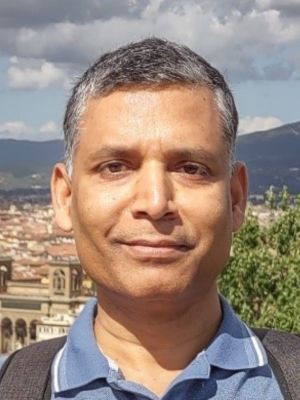
Ghulam A Nadri
Professor of History
Georgia State University
Speaker
In this presentation, Nadri discusses how Indian and European merchants and companies in early modern India understood time and encountered temporality in their commercial world. In the monsoon-driven Indian Ocean economy, time and keeping track of it had an immense value and most economic actors had to deal with temporality in the pursuit of business. Merchants, in particular, experienced it every day in their professional life and recorded commercial transactions contemporaneously and with much precision with regard to date and time. Based on some such records, Nadri examines three main aspects of Indian merchants’ consciousness of time and encounter with temporality. First, what time meant for merchants and how they experienced, structured, and organised it. Second, how did they represent or express time and temporality? Third, how did they respond to temporality and what were their strategies to deal with it?
Speaker
Ghulam A Nadri
Ghulam A. Nadri obtained his PhD from Leiden University in 2007. He was a Newton International Fellow at LSE (2011-2012) and is currently director of the Asian Studies Center at GSU. He has published two monographs (The Political Economy of Indigo in India, 1580-1930: A Global Perspective, Brill, 2016 and Eighteenth-Century Gujarat: The Dynamics of Its Political Economy, 1750-1800, Brill, 2009) and over a dozen journal articles and book chapters on commodities, merchants, maritime labour market, economy, and trade in Gujarat and the western Indian Ocean. His current research project explores the business world of the Parsis and Indian capitalism in the eighteenth and nineteenth centuries. He teaches graduate and undergraduate courses on the history of India/South Asia, the Indian Ocean world, Asia in the world economy, Asian Studies, and world history.