Bird of Thought: Entanglement and the Illusion of Separation
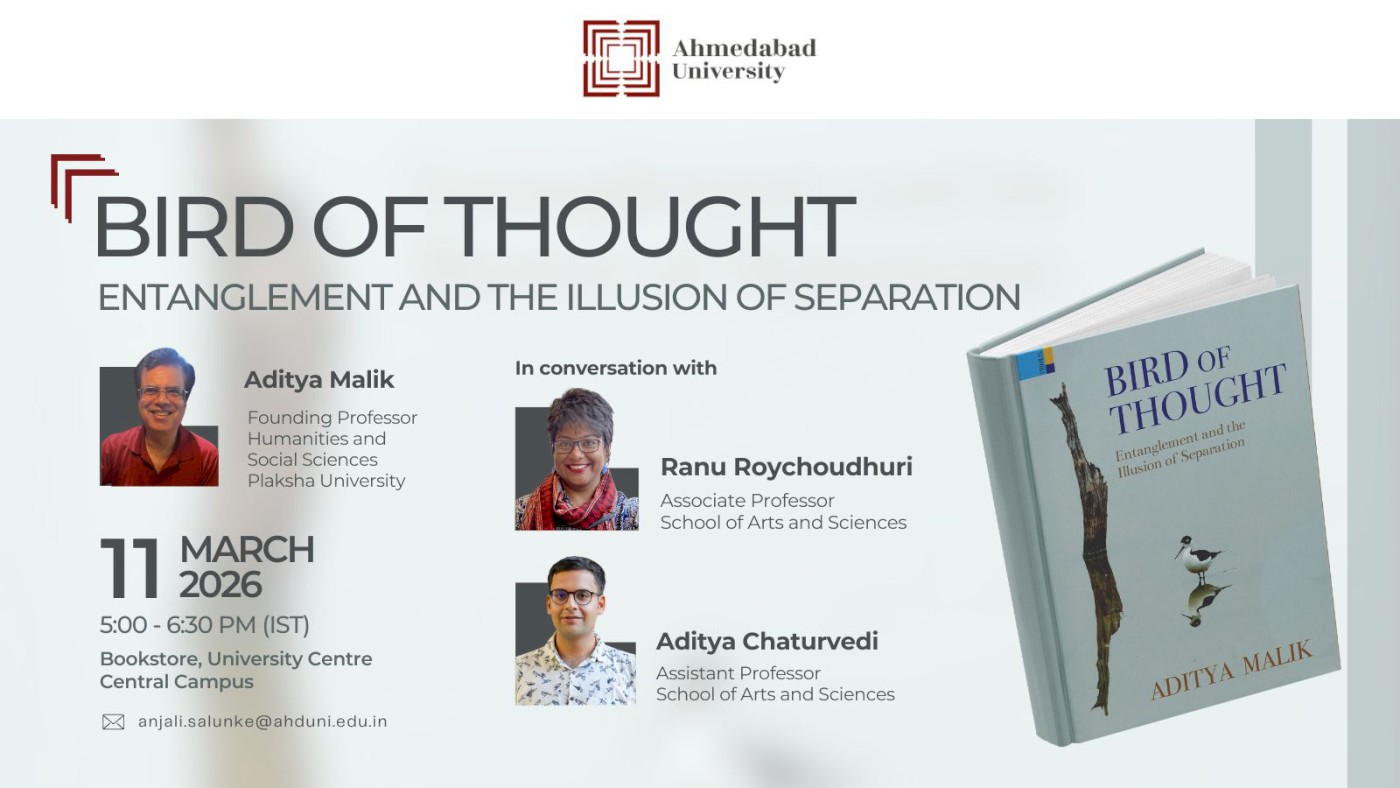
Bird of Thought is an exploration into the idea of ‘relationality’ in conceptual and theoretical terms as the fundamental characteristic of all phenomena, processes, and events, including those involving conscious subjects and the world of objects they occupy. Along these lines, the author employs the notion of ‘entanglement’ found in quantum mechanics to create a new, re-imagined, ‘prior-to-material’ understanding of Earth as a field of possibility that gives rise to simultaneously occurring, inter-dependent, relational spheres of the biological, physical, and social. Interspersed within these themes is a discussion of literary and philosophical genres from different historical periods that articulate ideas of interdependence and harmony through dreams, alchemical visions, and rules of musical composition. The questions and materials here are placed within a transdisciplinary framework so we can begin to comprehend the immense complexity of the world, which cannot be adequately grasped by specialised areas or disciplines.
Malik suggests that underlying the many intractable scenarios the world faces today is, in fact, a predicament of thinking. Bird of Thought moves between the domains of philosophy, physics, anthropology, mathematics, dreams, visions, musical composition, and semi-fictional narratives while attempting to build a way of thinking about the world that yields a transformation in both the thinker and that which is being thought.
Date: Wednesday, March 11, 2026
Time: 5:00 - 6:30 PM IST
Venue: Bookstore, University Centre, Central Campus
Speakers
Founding Professor
Humanities and Social Sciences
Plaksha University
Speaker
Associate Professor
School of Arts and Sciences
PhD (University of Chicago)
Research Interests: History of Photography; Global Modernism; Contemporary Art; Intellectual History of Art; Art Historiography; Modern South Asia; Postcolonial Studies
Moderator
Assistant Professor
School of Arts and Sciences
PhD (Emory University)
Research Interests: Indian Intellectual History of the late Second Millennium (Vaiṣṇava Vedānta, Puṣṭimārga), Religious Studies, Bhakti Studies, Tantra, and South Asian Art History
Moderator