Wednesday
04
February 2026
11:00 AM - 12:30 PM IST
Location
Room 331, School of Arts and Sciences
Central Campus
Share
Alien and Alternate States of Consciousness
Arts and Sciences Research Seminar Series
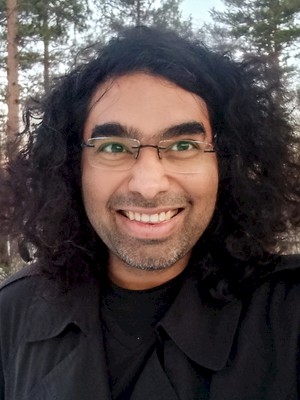
Nikhil Mahant
Marie Skłodowska-Curie Postdoctoral Fellow
Uppsala University
Sweden
Speaker
What are alien and alternate states of consciousness? How can they be defined and described? This talk introduces a new methodology -- the ‘Structural Variant’ (SV) approach -- to address these questions. Despite its first-personal nature, certain facts concerning ordinary consciousness hold true generally and are constitutive of the phenomenon. For instance, ordinary consciousness is always an experience of some concrete or abstract object (intentionality); ordinary consciousness always involves an experiencing subject apart from the experience (subjectivity); ordinary states exhibit diachronic and synchronic unity; temporal order, etc. The central claim of the SV approach is that alien and alternate conscious states are structural variations of ordinary states: they either lack a feature or possess an entirely new structural feature. The approach holds the promise to advance the study of consciousness in several ways. By providing their precise definitions, it will facilitate a scientific understanding of what are often termed ‘altered’ states of consciousness (e.g., mystical and drug experiences, certain mental pathologies, NDEs, etc.) Further, if non-human entities like AI or animals can be conscious, it is highly unlikely that their consciousness will have the same form as ordinary human consciousness. By providing a map of the space of possible conscious experiences, the approach will advance the investigation of non-human consciousness.
Speaker
Nikhil Mahant
Nikhil Mahant works on topics within the philosophy of language, mind, and artificial intelligence. He is a Marie Skłodowska-Curie postdoctoral fellow at Uppsala University, Sweden. His project—titled ‘Do AI generated outputs have content?’—focuses on philosophical questions concerning the linguistic, agential, and mental capacities of AI systems. Earlier he has worked at the Central European University (CEU), Vienna and St. Stephens College, Delhi.